Author Archive
The LOST Finale as a Meta-Metaphor for the Death of a Series
I wonder if the "Man of Science/Man of Faith" argument could be extrapolated to refer to the skeptics vs. those who had faith in the writers.
“Lost” (pun intended) in the hubbub of last night’s “polar”-izing finale, buried beneath the mystical corks, and cliffhanger fights; airplane escapes and journeys into the afterlife together, is a metaphor that I have yet to see in any of today’s recaps, though I have purposely waited to read Jeff “Doc” Jensen’s EW column for fear of it being the only one to taint my idea with his. Most of the disagreement over whether it was a satisfactory conclusion stands between the two camps of fans: people who wanted more “answers” to mysteries of the island (Jacob’s Cabin, The Hurley Bird, Walt and Aaron being ‘Special’, or even why there’s a giant cork in the island to begin with), and the ones who were more interested in where characters’ stories ended. There are those people (NY Times and NY Post, I’m looking at you) who didn’t understand things that were plainly spoken (“What happened was REAL”), but I tend to throw them out, because they obviously haven’t put enough thought into it.
In case there’s confusion, a brief recap of the important points. The entire season we’ve been given what the show’s writers endearingly call the “flash-sideways”. Instead of mixing in the main narrative with flashes of what has happened (flashback), or what will happen in the future (flash-forward) like they’ve done throughout the series (though the term “future” is relative, and makes my brain hurt), they’ve shown us the same characters we’ve known, in a time that we’ve already seen, now in a world whose relationship to the island universe is unknown. Now, the characters are different though, taking us back to the mindsets and issues they were dealing with in the first season, before all of the crazy island adventures changed, and in most cases, killed them. The characters, while having the same hearts and basic characteristics as the ones we’ve come to know, are altered a little bit, but dealing, in essence, with the same baggage as they did in the real world. Much of the enjoyment of this sixth and final season, just as in the first, lies in discovering who these people are in this world and realizing just how much different they are than the characters we grew to know. The only complication of this narrative device is that since we, the viewer, are incapable of coming to an understanding that both of these universes can simultaneously exist, we have to find a way in our own minds to reconcile the two together. “Which one isn’t real?”, or “Which one will become real?” we ask, because we can’t imagine how both of them can exist and still have meaning. My guess early in the season was that each one of them carried the same amount of weight and that the finale would create duel endings (not reconciling these universes), one happy, and one where everyone died. This would leave the viewer to have to decide for himself which one was real or if both were. I was wrong.
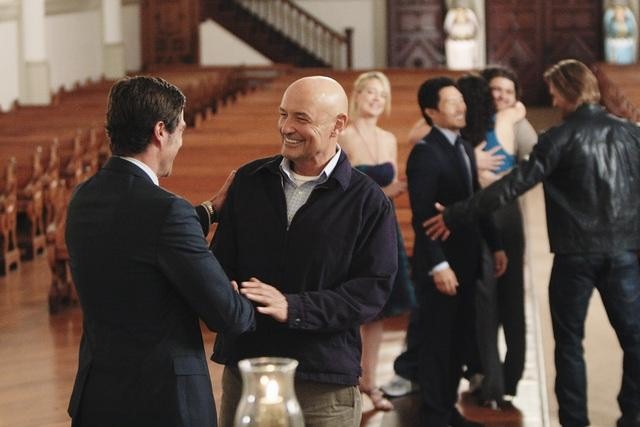
The way they were reconciled was by having each character in this “sideways” universe realize that it wasn’t real; that everyone there had died and that it was a holding place for them to move on to “what comes after death”. Everything on the island had happened. Some people died in the course of the show’s run; some lived full lives After Jack Shepherd (A.J.S.). But there they all were, waiting to move on as one group, changing Jack’s “Live together or die alone” mantra to one of “Live together AND DIE TOGETHER”. Their hurdle to enlightenment and realization of where they were in this universe was letting go of petty issues, guilt, fear, atonement, and instead, embracing the love of others. The Island, and the time spent on it were the most important parts of these people’s lives, and all that came before it was just a prelude and backstory. The relationships forged lasted beyond the characters lifetimes and stayed in the collective unconscious until they were ready to “let go”. Once this was understood, they could all go together towards that slightly cheesy white light, to whatever lay beyond. It was a mostly beautiful, and, at the time, slightly sappy ending, that I ate up wholly, reuniting characters but not compromising by bringing them back to life. Dead is Dead. And it seems as though they successfully put to bed the themes of death and love that hearken all the way back to when the first character, Boone, bit the dust as John Locke’s sacrifice to the hatch.
Before the finale, someone at my place remarked about how more than eighty percent of the characters ever introduced on the show have been killed off, and after last night’s episode, I realized that these deaths weren't merely part of ratings boosting, or shock value, or plot progression, but they were there to bring about discussion on the theme of death. Anyone can go at any time. That’s a phrase I’ve heard the writers say they’ve wanted to impart on our minds for the entire run of the show. They were going to go so far as to potentially kill Jack in the first episode, originally. If you think about it, there’s probably a whole section that I could write about how the smoke monster/man in black was the antagonist because he couldn’t come to terms with his own anger at his death. Sure he wanted to move on (get off the island), but he couldn’t let go of the pain of the past, and parental issues and learn to accept his life for what it was and love. Jacob, as well, stayed around the island, in spirit form, until he was able to let go of his island protector-ship spurned by his guilt over his brother’s death. Michael was trapped as a spirit on the island forever because he couldn’t get past his misdeeds. But this is all discussion for some other time.
What I’m interested in here is the idea of how the show deals with the topic of death, as it relates to the actual death of the show itself. Wow! THAT IS META! Let me clarify that sentence: In the episode, characters are struggling to deal with the idea that their lives are actually over, and they must move on to the next phase together by letting go and embracing a community of love. Hell, the first scene is a coffin coming out of an airplane and the last is a wake/funeral; if that’s not metaphor material, nothing is. In fact, I’d venture to say double metaphor: death of the characters themselves (aside from the specific Christian Shepherd, as the surface example) AND death of the show. Imagine, if you will, that instead of Christian, inside of this casket is a show that has grown with us over the past six years, one that has become our friend, safe haven, source of philosophical debate and stability in a constantly changing world. Imagine that the fan community for the show, one that brings people together in discussion and love, and one that fills living rooms with ten people or more (or less) per week to share in this joint experience is the crowd of characters in pews embracing each other, joyful, weeping, and filled with human emotions. Last night’s episode wasn’t just about characters accepting death and letting the minutiae go, it was about us as fans of the show learning to do the same. But with this show, unlike most, we had to go together. We had to let go of all the unresolved plot points from four years ago and accept that it had ended. And fill the world with love for it and each other. And last night, and this morning, the internet pretty much exploded, with people who loved it, who will remember the good times and cherish it forever in the “what comes after”, and with those who felt burned, angry about the small things, and may never be able to find peace in the resolution. They’ll be haters, but they’ll be stuck in their “waiting room”, ready to be enlightened when they let their cynicism go.
The more I think about it, the more I realize they been trying to prepare us for this the entire season. Obviously, they knew the show was going to die. The entire flash sideways as a denouement not only works in the context of the characters dying, but for the show itself. While the characters were all set up with different life scenarios and what-ifs, many of them better versions of themselves dealing with the same problems, so was the ENTIRE PREMISE of the show itself. “What would happen if Hurley became a successful businessman, or Sayid could protect Nadia, or Sawyer could actually put away criminals instead of being one?” becomes “What if this horrific plane crash never happened?” What would a self-actualized, but slightly askew version of the first season flashback storytelling look like? How would it mirror (oh snap!) the beloved first season that served as the birth of these characters? In the exact same way as the characters went through this season’s sideways stories, not knowing what their place was, we ventured along the same way, only to be enlightened at the end, and able to see these stories for what they were: a waiting room, there to bring us back together with our deceased friends and help us move on to the place after as a group, a "fandom" if that doesn't sound too nerdy. Bless you LOST, for the friendships you’ve helped create and strengthen over the past six years will surely be enough to carry us over to whatever comes next. I’ve let go.


I think this metaphor pretty much works, but I'm sure there are a few holes you can punch here and there, and I didn't mean to come off as preachy in more than an "it's okay to move on" way.
As for the finale itself...


Learning to let go of the minor things, the mysteries, and go back to my first season mindset, where all I cared about were the characters, this was a total success for me. Sure there weren't "answers", but that's life. I'm dealing. The foam rocks falling seemed a little cheesy though, for the -.5 star. Seeya in another life, Brotha.
“Reimaginator” – Rock Sugar
What happens when Metallica and Journey get put in a blender, with a little Madonna for consistency? "Rock Sugar" happens.
You come across a lot of Mash-Ups on the internet. It seems like the cool, gimmicky musical viral video thing to do these days, and a lot of it is because the formula is so simple: take a well known song, find another seemlingly unrelated song that has a section or line in it with a similar chord progression and tempo (For instance, "Torn" by Natalie Imbruglia and "Where's the Love" by The Black Eyed Peas would be the first to come to my mind, as they're so similar and should render the Black Eyed Peas guilty of plagiarism) and put them together. Usually the musical hybrid is just done with samples from pre-recorded songs by the original artists, but what I found this past week completely tore apart that notion and blew me away. Rock Sugar is a completely tongue-in-cheek but wholly talented 80s Hair-Metal/Pop mash-up cover band. You heard (read?) me correctly; they're a band that plays 80s pop songs to the tunes of some of the most famous classic rock/hair metal bands ever. And they're amazing at it. This is heavy!!
From their brilliantly funny website biography, their history is as follows:
1989 should have been the best year ever for Rock Sugar, the big haired heavy metal band that had just broken the top 41 on the rock radio charts with their solid brass debut album “Bang You Like A Drum”. But instead of headlining concerts, Rock Sugar made the headlines when they were presumed lost forever after playing an extremely ill-advised gig celebrating the bat mitzvah of 13-year-old Lisa Rosenberg.
The show was performed miles out to sea aboard the private luxury yacht of Lisa’s father, schnapps millionaire Schlomo Rosenberg....
...Shortly after the chorus of Rock Sugar’s second song “Nail You Like A Hammer”, a drunken and violent brawl broke out involving the band, the rabbi, a clown, the captain, a guy in an Smurf costume, Schlomo and well over a hundred infuriated and now thoroughly sexually confused children. In the midst of the fight, as Jesse, the lead singer, was pummeling the Smurf and no one was steering the damned ship anymore, it struck an undersea stone wall. As the boat was sinking, the extremely unhappy and now yachtless Schlomo refused to let Rock Sugar climb aboard the life rafts to safety.
Having been denied rescue, the band credit their miraculous ability to make it to the shore alive only because of their firmly held belief that "Sharks don't eat metal". Left to their own extremely questionable survival skills, Rock Sugar managed to salvage several items from the sunken yacht. In addition to their instruments, they retrieved a hot pink battery powered boom box covered with stickers of Hello Kitty, a crate of batteries, 158 cases of schnapps and numerous articles of teenage girls' clothing, most of which the band admit to trying on and several pieces of which apparently fit and looked “pretty frickin’ awesome”. But things got worse when the horrified rockers discovered that the only music available for them to listen to was little Lisa Rosenberg’s very pop, very 13 year-old girl’s, very ‘80’s CD collection.
And so, the hardcore degenerate heavy metal members of Rock Sugar spent the last two decades stuck on an island with nothing to do but drink schnapps, catch hard to digest wildlife, befriend monkeys and dream of their long LOST groupies while listening only to, and being slowly and systematically brainwashed by, every favorite pop song of a 1980’s preteen girl. Bored, full of schnapps and wasting away on a tropical oasis, they built a stage out of driftwood, bamboo shoots and tree sap and got to work. Against the odds, Rock Sugar was alive… and they were practicing.
But does a hilariously fictional backstory make for a good album? I think your level of interest in each song comes down to the following criteria. 1) How well does the band play each song? 2) Do you know/enjoy the songs they used? 3) How surprised are you when the songs come up? and 4) How well do the songs mesh together? We can tackle these questions individually.
1.) How well does the band play each song?
The musicians themselves are brilliant. Essentially, they're a cover band with mostly great arrangements (see question 4), but they slip in and out of subgenres and vocal styles, flawlessly mimic and reinvent these classics, and can flat out play. Lead singer Jess Harnell (who, in the most bizarre part, is the voice actor behind Wakko Warner of the "Animaniacs", and uses his chameleonic voice talent to mimic the vocal styles of a multitude of lead singers) is simply amazing. The band breaks out the "Journey" songs twice, and he manages to hold his own against (if not outdo) Steve Perry, one of the five greatest lead singers of all time.
In fact, the album's second last track, "Round and Separated" (a mix of "Round and Round" by Ratt and "Separate Ways" by Journey) is an epic joy, almost entirely because of how talented the band is. The energy and technical proficiency here are high enough to elevate these two decent but not exceptional songs into something better than the sum of the two parts, into a cohesive whole that just might be better than either song ever was. Production level is solid. Every instrument can be heard cleanly, and the background vocal work is fantastic throughout.
2.) Do you know/enjoy the songs they used?
A large portion of enjoyment comes from whether you know these songs, but this knowledge isn't completely necessary. "Voices in the Jungle" is a prime example. I've never heard "Voices Carry" and am only slightly familiar with "Welcome to the Jungle". The song works though, because the source material is strong and appeals to me. Conversely, "We Will Kickstart Your Rhapsody" didn't work for me, solely because I don't think "Kickstart My Heart" is that great of a song. Other people I know have different opinions though. I just dont particularly like that style, I guess. But they can play it well, and sing the Bohemian Rhapsody harmonies. For the most part though, I enjoyed all the other songs. If you only know the pop (or relatively pop-py) songs, it works as an album of hard rock covers. You may miss the other musical references, but you won't have any idea what you're missing. Hard rock purists should find these songs funny at first, and then come to the realization that they aren't bad, it was just the way that they were packaged that was. (much like Britney Spears' "Hit Me Baby One More Time") On the whole, the songs are extremely enjoyable and catchy, whether you knew them previously or not.
3. How surprised were you when the songs came up?
I suppose if you checked the track list before listening to each song, you'd be able to guess at least one of the songs used in each track, but I think a great amount of the album's enjoyment comes from being thrown completely out of your element. You're going along, listening to the opening chords of a song you've heard a thousand times, played nearly exactly how you've heard it all those times, and all of a sudden, something completely unexpected, but highly recognizable pops up. You can't believe your ears! Why haven't you ever thought of that?! These guys are geniuses, you think. These songs were made to be played together! Part of this goes to question four, though. If the songs don't go well together, then this surprise aspect is just a gimmick, and a failed one. But when you're surprised and shocked, I think this is the biggest impetus to share this band with your friends; to see the looks on their faces when "Don't Stop Believing" comes in, instead of the "Enter Sandman" verse. The best example of this is the epic finale "Mashterpiece", "Dreaming of a Whole Lotta Breakfast". Again, you can probably guess what goes into it, judging by the title, but there are a lot of surprises in it, and they all fit perfectly. Whereas "Round and Separated" mostly works because of the band's talent and charisma, this songs works because of the amazing arrangement and the element of surprise. Have a listen.
4. How well do the songs mesh together?
This is the most hit-or-miss question. "I Love Sugar on Me" works because very little had to be changed in each song for them to fit against each other. But when the first verse of "Workin' for the Weekend" kicks in in "Prayin for a Sweet Weekend", it sounds awkward. The playing of the "Sweet Child of Mine" riff under the "Weekend" chorus works well though. "Heaven and Heaven" works great, even if it's more of a medley than a mash-up. "Here Comes the Fool You Wanted" is great, even if the "Nobody's Fool" contribution is only a line from the chorus sung over and over (on top of two other vocal parts) at the end. I feel like the chords on the verses of "Shook Me Like a Prayer" aren't the same as "Shook Me All Night Long", but instead, just power chords, played AC/DC-style, that would normally fit under the Madonna verse. The same can be said about "Straight to Rock City". Not to say that these tracks aren't great, they just needed some re-arranging to "fit together". The chorus part on "Straight to Rock City" while a brilliant melding of "Straight Up", and "Detroit Rock City", is a little strange, but it's something I can't put my finger on. Maybe something with accented syllables versus up/downbeats, but I have no idea. So in all, there are a bunch of songs where they took parts that work well, (a chorus section or something, where the two parts fit together) and built the rest of the song with the music from one element, and the style of another. This seems to be more of a style mash-up than a direct musical mash-up. Again, not that any of this is bad, but if you're looking for straight mash-up goodness, some of these songs might not be what you're looking for.


Most of these songs are epically awesome. A few of them though either don't work ("Prayin for A Sweet Weekend"), feel like filler ("Breakin' The Love"), or just didn't appeal to me ("We Will Kickstart Your Rhapsody"). Everything else is fantastic though. The musicianship is great, the songs are entertaining, and come with an already built-in knowledge that doesn't require people to listen to them over and over to learn the words and music. "Here Comes the Fool You Wanted" and "Dreaming of a Whole Lotta Breakfeast" are triumphs of arranging, and the sheer power of "Heaven and Heaven" and especially, ESPECIALLY "Round and Separated", elevate this to an album that I will keep in my music circulation for a long time. I can only imagine how great they'd be in concert. Also, props go to the pristine production quality of the album itself. Everything is audible and clean. And the concept itself is completely brilliant. They take the idea of being a cover band and elevate it to something wholly different, adding a level of creativity, and injecting new life into songs that have been stale from overplay on classic rock stations for a long time. Truly this is a rock-tastic piece of confection.
Southland Tales

Silent Bob or ZZ Top Member? You be the judge.
Is it possible to make a movie that is at once pretentious, derivative, completely incomprehensible, insanely long, outrageous just for the sake of it, tonally off-balance, with tons of distractingly recognizeable actors, and somehow surprisingly engrossing? Honestly, Southland Tales lives up to its negative hype. It is a car wreck of epic proportions. You sit there completely sucked in, but with your jaw hanging open wondering how a movie this completely off-the-wall bad can take itself so seriously, or even how it got funding in the first place.
The movie, Richard Kelly's follow-up epic mess to cult hit Donnie Darko leaps from place to place like a kid on a playground after too much candy and juice, and usually leaves you wondering who these characters are and why are they doing whatever it is they're doing, that is, if you can figure out what they are doing.
Full disclosure: I like Donnie Darko. I'm a little bit bitter towards it, but I like it. I think it's a fantastic collection of scenes and ideas that fit together tonally, but don't really make a coherent story. And I've tried to figure out the story. I was on the Donnie Darko bandwagon before the movie had even come out. I found the website, which at the time was something to behold, via a small article in EW magazine. Watched a bootleg copy of it while it was still in theatres. Had no idea what I just saw. I watched it over and over again, showing new people every time. I couldn't figure out the master plan of what was going on. Things were so disjointed, and there was never any exposition to give any clue as to what happened at the end. I bought the DVD, and when I listened to the commentary track, I was surprised to find out that the director also seemed not to know. There was no explanation. He was just putting stuff in that he thought would be weird. Fool me once, shame on you. Fool me again... uhh.... you don't get fooled again.
I really can't imagine that there was any plan going into this movie. Something about an extremist future, with big-brother republicans selling out for some kind of perpetual motion machine, and "neo-Marxists" (his word, not mine) bent on destroying everything for some reason. The media is a hyper-conglomerate of entertainment, commercials (most notably a car commercial, featuring two Hummers [the car] having sex with each other), propaganda, and news. And for some reason, every show is taped on a beach. The guy who created this energy machine (which looks exactly like the gyroscope in Contact) is somehow trying to take over the world by cutting off people's hands or something. Some people are trying to blackmail The Rock, whose father-in-law is running for Vice President (i think?). Drugs are involved, needless to say. Whatever satire Kelly's attempting, it's either already been done, or it's too broad to be saying anything, really.
Justin Timberlake is a "Revelations"-reciting narrator who sits on a machine-gun pedestal on the beach, looking to shoot God knows what, and really serving no purpose other than lip-synching to a song by "The Killers" in some sort of arcade, about halfway through. Sarah Michelle Gellar is a porn-star/talk show host who is either trying to blackmail The Rock or wants to be with him. I couldn't tell. I don't think she could. Sean William Scott plays twins. Cheri Oteri and Nora Dunn are crazy "neo Marxists", as well as Amy Poehler. And if three SNL alumni aren't enough, Jon Lovitz plays a racist cop. And if "SNL" isn't the only Saturday late night sketch comedy show on your radar, "Mad TV"'s Will Sasso is also there. Thow in the motley crew of John Larroquette (who's actually pretty good), Mandy Moore, an unrecognizable Kevin Smith, the Highlander as an ice-cream-truck-driving arms rocket launcher salesman, Wallace Shawn in a dress and makeup, Bai Ling, and Janeane Garofalo in two seconds of screen time that amount to her being an extra (granted i think her part was entirely cut out), and you've got a cast that is seriously going to distract, even if you had the most engrossing material.

If you think there's too much going on in this poster, wait til you see the movie.
Not that the material couldn't be interesting. It's got all the elements that could make it completely engaging: blackmail, WW3, cutting off people's fingers, perpetual motion machines, The Rock, fake murder plots, a giant blimp, memory loss, drugs, public beach mounted gun stations, and, yes, time travel. The problem is that there's way too much of it, and a lot of it for no reason. That someone saw this script and said "let's fund that" is remarkable. I really can't understand how someone didn't tell this guy to pare the story down to something that had actual character motivations you could follow. You know when you start a movie and the first title says "Part 4" (the first three parts were released as comics and one wonders how much more coherent they were), that things are going to be confusing. Even more remarkable is the amount of on-camera talent in it. How any of the actors could play these scenes is baffling to me, because I was constantly asking "Who's that? Why is he doing that? What's his purpose in this movie? For what reason is he so important that he's the narrator?", and if I was while I was watching, I guarantee that the actors were asking ten times as many questions. I'd like to have heard Kelly's explanation as to why The Rock always put his fingertips together melodramatically when he was confused. EVERY TIME! And I wonder if The Rock could tell me that. Yes, there's something to be said of making the audience think and figure something out, but like I said before, "I'm not getting fooled again".
There is also something to be said for style over substance, but while it looks good (especially the blu-ray-quality version), and has some strangely unique things to it, most of it just felt like a rip-off of something else. There were multiple David Lynch moments, including a random group of recurring background little people; a strange old asian lady talking some kind of prophetic nonsense; and a recontextualized version of a highly-recognizable song, sung in a foreign language by a woman on a stage. The extremely ensemble and spread-out nature was taken right from P.T. Anderson's Magnolia (as, it seemed, was the strange pacing of a lot of it), which in turn (at least i hear) was supposed to be a Robert Altman homage. Lastly, and most importantly of all, he's completely ripped off of himself. Incomprehensible time travel/ Dimensional rifts; someone getting shot in the left eye; large aircraft falling out of the air; the end of the world; wormholes (the effects work even looks the same). It's all there. It's not that the style is bad; it's just incredibly unique while at the same time, paradoxically all been seen before. (figure that one out).
The theatrical cut is two and a half hours, one half-hour less than the widely-derided Cannes cut of the film, which you can see in parts, in low-quality video on the YouTubes, if you're a masochist. I'd like to think that the missing half-hour explained some of the things I didn't get, but judging from those reviews, I'd be wrong. (Though, from the few seconds of these clips I've seen, at least the narration is different and makes more sense). The movie cost between fifteen and sixteen million dollars to make, and was released in only 67 theatres (even limited releases usually get about 300), for a whopping $270,000 domestic gross. Yes, that's "thousand". After seeing it, one can easily see why. Not that I wouldn't watch it again, mind you, but only with people who have no reservations and are willing to sit through the whole thing. I'd like to see the confusion and anger on their faces, and at the same time their desire to keep going because it can't get any more outrageous. Oh yes. It can. Just for the sake of being outrageous.


Southland Tales takes all the faults of Donnie Darko and magnifies them tenfold. It's not a failure of style, as the film's got that in spades, but it is a complete failure of storytelling. Characters completely do major things for no reason, the order the scenes are in leaves you even more confused, and finally when a strange cabal of characters sits The Rock down to explain the whole story (for no other reason than to explain it to the audience), it makes no logical sense whatsoever. I guess there's at least an attempted explanation.
One star for allowing my friends and I to complain about how none of the story worked, and half a star for the cool scene where Sean William Scott was messing around with a mirror that took about half a second to mimic his action.
Half Inventing Stuff Part 3, or Other People Stealing Your Ideas Without Ever Having Met You or Knowing that They Stole Something Part 3

The Bar-B-Fume bottle design and logo from an infomercial I did as a class project in 2002. Graphics designed by Rob Edwards.
So back in 1998, I had an English oral presentation to do in which I'd be selling a made-up product. After racking my brain for hours, my thought process went as follows: "What do teenage girls want? Answer: Guys. Then what do teenage guys want? Answer: Meat. So the way for a girl to get a guy would be by smelling like meat." The presentation went fantasticly. I had charts and prototypes (sort of... bottles of cologne and body-wash with crudely designed logos). For the women who didn't want to have to smell the Bar-B-Fume, I invented the "Scent Remover 5000", which was just a clothespin to put on your nose. I demonstrated how to use the body wash (which for my purposes was just barbecue sauce in a soap dispenser) by smearing it all over my face. And I finished with the tagline, "Ladies, truly the way to a man's heart is now through his stomach."
Two years later, the product was revived as an info-mercial for a TV studio production class I was taking, but this time with way better logo design and a killer intro. I can't attest to the quality of the rest of it. I haven't watched it in years. You see, I can't find the tape with that semester's projects on it. To make matters worse, I can't even find the tape that has the original speech on it. I have most other semesters' projects, and I have the other speech we had to give that year in high school, but as it stands, right now the only tangible evidence of Bar-B-Fume existing is the logo I saved.
What makes this important is that Burger King just started marketing a meat-scented fragrance called "Flame". Here's the website. Granted, it smells like the Whopper and not like barbecue sauce, but it's still enough to have me shouting "NOOOOOOOOOOOOOOOOOOOOOOOOOOOOOOOOOOOOOOOOOOOOOOOOOOOOO". I guess I just need to follow through more.


I'm pretty angry.
The Lost Posts – “Attending the June 3rd 2007 Phillies-Giants Game”
Going back and finding posts I never finished, I saw that this one was completed, but never posted... maybe I just didn't have a picture to go with it.

He could probably have jumped over Danny DeVito.
Allow me to list the numerous things that made this game completely awesome for me to have seen in person.
1. Shane Victorino Hula Figurine- As part of the larger "Hula Day", celebrating Shane Victorino, for fans under 14 they were giving out Dashboard Hula Figurinesof the Hawaiian outfielder. We put a baseball hat on my 21-year-old sister, she passed as 14 I guess, because the old guy at the gate totally gave her one. Later, when I commented on the fact that she passed for 14, she punched me in the stomach.
2. It's Always Sunny in Philadelphia's Rob McElhenney and Danny DeVito threw out the first and second pitch, to a hula-skirt-wearing Phanatic. DeVito's only made it halfway.
3. Bizarrely terrible plays. Ironically, it was anything but sunny as there was a constant rain, which caused Pat Burrell to throw a ball about 15 feet, and Mike Zagurski to throw a ball directly into the ground. It didn't, however cause Freddy Garcia to not run out a ground ball to second, with deserved "Boo"s from the crowd.
4. Five-run comeback, punctuated by Ryan Howard's three-run homerun, with two outs, to give them the lead, which was eventually relinquished when the Giants tied the game.
5. Watching Danny DeVito Hula Dance during the 7th inning stretch.
6. Booing Barry. Barry Bonds came up with a chance to give his team the lead. He was greated by bigger BOOs than Freddy Garcia, and grounded into a double play.
7. Walk-Off. After letting the Giants tie the game in the 9th, the day's focus, Shane Victorino becomes the hero with a walk-off home run in the 10th. Though the stands in that video are empty, I don't think that many people left. It had been raining constantly for about an hour and most people were hiding wherever they could find cover.


This game just goes to show why you never leave a baseball game until it's over, even if it's raining.

He could probably have jumped over Danny DeVito.
Allow me to list the numerous things that made this game completely awesome for me to have seen in person.
1. Shane Victorino Hula Figurine- As part of the larger "Hula Day", celebrating Shane Victorino, for fans under 14 they were giving out Dashboard Hula Figurinesof the Hawaiian outfielder. We put a baseball hat on my 21-year-old sister, she passed as 14 I guess, because the old guy at the gate totally gave her one. Later, when I commented on the fact that she passed for 14, she punched me in the stomach.
2. It's Always Sunny in Philadelphia's Rob McElhenney and Danny DeVito threw out the first and second pitch, to a hula-skirt-wearing Phanatic. DeVito's only made it halfway.
3. Bizarrely terrible plays. Ironically, it was anything but sunny as there was a constant rain, which caused Pat Burrell to throw a ball about 15 feet, and Mike Zagurski to throw a ball directly into the ground. It didn't, however cause Freddy Garcia to not run out a ground ball to second, with deserved "Boo"s from the crowd.
4. Five-run comeback, punctuated by Ryan Howard's three-run homerun, with two outs, to give them the lead, which was eventually relinquished when the Giants tied the game.
5. Watching Danny DeVito Hula Dance during the 7th inning stretch.
6. Booing Barry. Barry Bonds came up with a chance to give his team the lead. He was greated by bigger BOOs than Freddy Garcia, and grounded into a double play.
7. Walk-Off. After letting the Giants tie the game in the 9th, the day's focus, Shane Victorino becomes the hero with a walk-off home run in the 10th. Though the stands in that video are empty, I don't think that many people left. It had been raining constantly for about an hour and most people were hiding wherever they could find cover.


This game just goes to show why you never leave a baseball game until it's over, even if it's raining.
Leaking a Fake Version of Your New Album on the Internet (with actual fake songs)
Yet another Ben Folds-related review. I'm probably not going to write anything about his new album that's coming out this fall, and since this is much more interesting, I'd rather substitute it anyway.
I found this article on RollingStone.com that discusses how this fake album came about, with bits about each song. Basically, he and his bassist and drummer got some studio time in Dublin and wrote six fake tracks, added three songs that are going to be on the album, and gave it to some guys to leak.
Obviously the songs aren't all going to be great, but for a free download that's basically been sanctioned it's not a half bad idea. There's the free media attention that you get from the music magazine, and the rest of the internet music community (google search for "fake album leaks" and you'll almost exclusively get pages about this specific one), which is always good for someone who could possibly be deemed irrelevant and past his prime.
It gets his fan base excited and talking, though that could be a good thing or a bad thing. Not coming out immediately and saying that it's fake leads to discussion about the new sound (judging from the Rolling Stone samples, he's got yet another new sound he's going for. Kudos for changing it up, but like the last time, it's going to take some getting used to). The risk here is that while it does drum up interest in the new album, the fanbase is most unanimously going to be buying the new album anyway, and by putting out sub-par songs you can only hurt your chances that some of these people will be willing to pay for the album when they can just download it (of course, thereby missing the meaning of releasing a fake pirated version in the first place).
This isn't to say that this fake album is all that bad, it's just a little bit below full-album standards. It's about on-par with the EPs that he put out between "Rockin the Suburbs" and "Songs for Silverman". A few of these songs (Brainwascht, Dr. Yang) actually sound like they could be on that first Ben Folds Five album from way back when, which is probably the first time in ages that you could say something like that (whether it's a good thing or a bad thing depends on the person I think).
"Bitch Went Nuts" will probably be a concert staple in the future.
"Cologne" is great, though it's going to be on the album in a modified version.
"Way to Normal" is just strange, not that the bulk of it isn't a perfectly normal song, but it's three distinctly different sections. I especially love the "Flash Gordon"-inspired opening. The other ones besides "Hiroshima" are pretty much forgettable, but it was free so I'm not complaining.
Putting (at least similar versions of) three of the actual songs that are going to be on the album is a smart move as well, tempering the cries of "I downloaded this for nothing", and serving as an actual preview of what's coming. It's basically the same as releasing a free three-song single.... with six bonus tracks.


Releasing a fake version of your album on the internet (with actual fake songs) gets four stars, as it can get you free media attention, the fan base, and maybe even some others, talking about the upcoming album, and serve as a preview of what the album is actually going to be like. The only negative is that since he didn't come out right away and say it was fake, there may have been some negative early reviews. Providing full-disclosure, which he eventually did, mitigates this a bit though. In the end, I think that no matter how mediocre, fans appreciate what is basically a free EP.
I found this article on RollingStone.com that discusses how this fake album came about, with bits about each song. Basically, he and his bassist and drummer got some studio time in Dublin and wrote six fake tracks, added three songs that are going to be on the album, and gave it to some guys to leak.
Obviously the songs aren't all going to be great, but for a free download that's basically been sanctioned it's not a half bad idea. There's the free media attention that you get from the music magazine, and the rest of the internet music community (google search for "fake album leaks" and you'll almost exclusively get pages about this specific one), which is always good for someone who could possibly be deemed irrelevant and past his prime.
It gets his fan base excited and talking, though that could be a good thing or a bad thing. Not coming out immediately and saying that it's fake leads to discussion about the new sound (judging from the Rolling Stone samples, he's got yet another new sound he's going for. Kudos for changing it up, but like the last time, it's going to take some getting used to). The risk here is that while it does drum up interest in the new album, the fanbase is most unanimously going to be buying the new album anyway, and by putting out sub-par songs you can only hurt your chances that some of these people will be willing to pay for the album when they can just download it (of course, thereby missing the meaning of releasing a fake pirated version in the first place).
This isn't to say that this fake album is all that bad, it's just a little bit below full-album standards. It's about on-par with the EPs that he put out between "Rockin the Suburbs" and "Songs for Silverman". A few of these songs (Brainwascht, Dr. Yang) actually sound like they could be on that first Ben Folds Five album from way back when, which is probably the first time in ages that you could say something like that (whether it's a good thing or a bad thing depends on the person I think).
"Bitch Went Nuts" will probably be a concert staple in the future.
"Cologne" is great, though it's going to be on the album in a modified version.
"Way to Normal" is just strange, not that the bulk of it isn't a perfectly normal song, but it's three distinctly different sections. I especially love the "Flash Gordon"-inspired opening. The other ones besides "Hiroshima" are pretty much forgettable, but it was free so I'm not complaining.
Putting (at least similar versions of) three of the actual songs that are going to be on the album is a smart move as well, tempering the cries of "I downloaded this for nothing", and serving as an actual preview of what's coming. It's basically the same as releasing a free three-song single.... with six bonus tracks.


Releasing a fake version of your album on the internet (with actual fake songs) gets four stars, as it can get you free media attention, the fan base, and maybe even some others, talking about the upcoming album, and serve as a preview of what the album is actually going to be like. The only negative is that since he didn't come out right away and say it was fake, there may have been some negative early reviews. Providing full-disclosure, which he eventually did, mitigates this a bit though. In the end, I think that no matter how mediocre, fans appreciate what is basically a free EP.
ben folds show in Easton, PA, april 10th, 2008
Audio isn't great, but it's the best version of Free Coffee I could find. There's an aluminum cake pan in the piano as well as a distortion pedal. He didn't mess it up last night, like in the clip, thankfully.
Quick (hopefully) post about last night's ben folds concert at lafayette college in easton, PA. I've been to six Ben Folds concerts now (since 2001 and most of them were relatively close to where i was at the time, but yes, it's still a lot), and I'd probably rank this as the second best of them all, with last year's Muhlenberg show taking the top spot. Reasoning for this is that the drumer and bassist add so much more to the sound, both instrumentally and vocally, and both of these past two shows didn't require me to sit through rufus wainwright sucking the energy out of the crowd.
Granted, we had to sit through an equally ill-picked opening act (the same as muhlenberg), a solo guitar player/"singer" whose songs consisted of mostly playing the same chord over and over again arhythmically, droning on and on about there being "evil in the world" until the words had no meaning, all while basically looking like Sam Rockwell doing his best Crispin Glover impression. He also seemed to be drunk?
Mr. Folds (as the New York Times would say), put on his normal, energetic show for about an hour and forty five minutes, adding new bits to established songs, and going back to the beginning of the catalogue, including seven Ben Folds Five songs, and playing four new songs. Apparently, they just finished recording the new album; didn't say anything about release dates. Overall, just a fast-paced, awesome show. Also of note, t-shirts being sold read "I [Heart]ed Ben Folds... before he sucked".
Setlist (I felt like a nerd writing the song titles down, and I probably was right in feeling that way) below.
New Song- Didn't hear the title or any of the words really. Possibly "Brainwashed"
Gone
Hiroshima- New song about falling off a stage in Japan and doing the show with a concussion.
Bastard- That vocal part in the middle (adjusted from the album to suit three people, still sounding like more) is ridiculous
Still Fighting It
Free Coffee- New song. Played with a cake pan inside the piano, and a distortion pedal on some of the keys. Really interesting sound.
You to Thank- Went to the 70s sounding keyboard to the side of the piano for part of the solo, and was actually playing tough parts on both at the same time, angled ninety degrees apart, for a bit.
Landed- Cameo by some tambourine player got major cheerage.
Annie Waits
B*tches aint Sh*t
Lullabye (rest of the band stepped down for this and luckiest)
Luckiest
Narcolepsy- Maybe the best version of this I've heard. Especially effective after the quiet sap-fest "Luckiest" (not that it's bad, it's just quiet and sappy). Narcolepsy was long, loud, and with a good bit of jamming in the middle.
Army- Didn't teach the audience the horn parts, but just kinda pointed, expecting them.
Kate
Rockin' The Suburbs- Claimed it was originally going to be about Bob Seger beating someone up with tire chains for robbing an old lady.
Underground
Zak and Sara
One Angry Dwarf- These last two are the normal, fast paced closers, amping up the energy until he throws the stool at the piano.
Encore
Effington- New Song. Nice three-part a cappella opening. Something about "If there's a god, he's laughing at us and our football team". Kinda sounded like a school fight song. Tambourine player reappeared to applause.
Philosophy- with the normal stuff added at the end.
Not the Same- w/ audience vocals.


Four and a half stars. Minus half for the draining opening act, the smallest crowd, and possibly least interested (though that's not to say they didn't bring the applause, maybe just didn't feel like singing) I've seen for a show, and opening his set with a new song that nobody knew.
Cloverfield
Pirated video that shows clearly what the monster really is.
It's been a while since we've posted... I know.
To put it simply, Cloverfield is effin' scary. I would venture as far as to say that it was the most viscerally affecting movie I've seen since Children of Men. This isn't just a monster movie; it's a movie, that, like The Mist and I Am Legend before it, plays on our greatest unthought-of fear, that something so disastrous could happen that all manner of government protection would be rendered moot. Mass chaos with no way out, and nothing to keep you alive but your own strength of will in circumstances that you'd never imagine yourself in. Cloverfield is so effective at what it sets out to do, reminding us that our modern "civilized" society is one catastrophic event away from being reduced to nothing more than bickering people who've been taken over by primitive "fight or flight" survival instincts.
The way the reviewers have talked about it, I'm sure you've all heard complaints ad nauseum about the "lack of story", the "unlikeablility" of characters, the illogical choices made by certain people, and that it didn't make sense for someone to keep recording through the whole thing. Honestly, I didn't care about any of those things at all, and it's a testament to how involving the movie is that I only once stopped to think about the fact that a camera battery wouldn't last as long it does, and only one other time to think about how long it would take them to walk in a subway tunnel the distance that they said they did. Despite the rich, hipster vibe that the characters exuded, I didn't really find them all that grating, even though it was basically as if Godzilla interrupted an episode of Felicity (with good reason; both the executive producer and the director were co-creators of that show). If they indeed go ahead with a sequel to be shot in the same style, telling a different story from the same night, I would love to see people from the opposite end of the spectrum and how they managed, how different their priorities were, and just how they would differ in their actions in general.
More often than not though, I found myself sitting in my chair, with my mouth wide open, totally enraptured by what was going on. Would I too be able to climb across a roof of a forty-story building that was leaning at a sixty degree angle from the ground, only being held up by the building next to it? Would I have gone back to save someone from a giant killer spider-crab in a pitch black subway tunnel? Why was this monster movie the first one that ever made me question the lengths I would go to survive? As intense as it was, The Mist, never made me feel this way, despite the fact that the subject material was quite similar. In my opinion, it goes to media theorist Marshall McLuhan's statement from his book "Understanding Media:Extensions of Man", that "The Medium is the Message". To put a very long and convoluted series of the oftentimes contradictory thoughts by a raving Canadian lunatic into a simplistic summary, the method by which a message is sent from one person to another is oftentimes more important to the delivery than the message itself. The best example of this is the famed Nixon-Kennedy debate where the majority of radio listeners seemed to think that Nixon had won, while the television viewers, able to see Nixon's body language, sweating, and poor make-up job, were convinced that Kennedy won. On a side note, I always wondered if the people who did that study took into account the differences in politics between the people who listened and people who watched, and if that played into their answers to the question.
How this idea of medium applies to Cloverfield is that we've been programmed with the language of film over the past one-hundred years. Even if we aren't aware of it, we've come to expect a certain syntax. We don't notice it though, until a reverse angle of a shot doesn't match, or an edit isn't smooth. The Mist lives by these rules, and the whole time it tries to invoke this question of "what happens when the world goes to hell?", while also playing it like a 1950s B-horror movie creature feature. Issues with the unfocused nature of the plot set aside, it's the fact that the movie's presented in the language of Film that makes you step back and realize how preposterous the story really is.
Ironically, it's the movie inspired by the crude and incredibly repetitive Godzilla series that has effectively transcended this medium and broken out of the box, leaving genuine lasting emotion. The same way that we've been trained to understand that movies aren't real and that we shouldn't feel anguish when Jason Vorhees, "an unstoppable killing machine", hacks someone up with a machete, we've been trained to recognize video as infallible. Which affects you more: watching an alien pop out of someone's chest killing them in a movie, or watching a video of a skateboarder falling fifty feet to a hard wooden surface and seeing his shoes explode, but then being able to walk off, relatively unharmed? We haven't yet learned to apply the same reality filters to video that we currently do to film, and this is what Cloverfield exploits.
No matter how many times you try to tell yourself this movie isn't real, the medium that the message is delivered in contradicts your thoughts and plays to your instincts. What would happen if you took this movie over to undeveloped parts of Africa (as McLuhan puts it, a place where people have not been "immunized" to this medium) or if someone years down the line saw this without the context to put it in? It's very likely that they might think it actually happened, especially if they've seen the 2001 attack footage. Critics (used literally, not film critics) of the movie have been saying that it exploits September 11th imagery, but I would argue that it successfully uses those scenes we have committed to memory to scare us in a very real way, much more than any slasher flick or monster movie has done before. Maybe it's the fact that I've been spending a large amount of time in the area that was directly affected in the movie. It's more likely that I was less able to discern the difference between the two because when the twin towers fell I was watching it on a movie screen in a film auditorium. Watching Cloverfield, it was hard not to think back to this moment and relate the two, drawing all that emotion out.
One of the most harrowing scenes in the whole thing is the destruction of the Brooklyn Bridge, which I've walked over a few times. It may very well be the most frightening destruction of a major landmark ever to be created in a movie, far scarier than anything in the modern classic Independence Day or its red-headed step-brother The Day After Tomorrow, completely because of its realism and the point of view of the person delivering the message.
Here's where the debate rages though. Should a movie be judged on how effective it is at making you feel a certain way, or on the quality of story and characters? If it uses the story and characters as well as technically impressive work to achieve this emotional effect (such as in I Am Legend), then it's obvious that it's a good movie. What happens though, when the two aren't mutually exclusive, when character development and a tight story take second chair to exceptional method and incredibly well-realized scenes? Is it still a good movie? This isn't to say that Cloverfield offered no cohesive story or successful characterizations (the realism in the actors' portrayals " not so much film acting, but moreso being in the situation with a natural intensity that you would expect of someone living out this unthinkable scenario""certainly drives the moments and carries the film as much as the technique), but it's a chase movie in the most basic sense. Something's attacking, nobody knows what it is, but we're running from it. There's really nothing more to it than that, and I would be hard-pressed to say the movie had an effective story to tell, instead opting to give you a few character dynamics and letting them provide the motivation for an hour's worth of recorded events. I've heard completely mixed reviews from friends and film critics in regards to this movie, and it seems as though this question of how to judge is where the basic disagreement lies. For me, the movie was incredibly effective at what it set out to do, and was plenty enjoyable from start to finish (and I loved the epic "Cloverfield Theme" that scored the credits) and that's all I can ask for in a threatrical experience.
One last thing. If in my diatribe about the presentation of the movie I left out the success of The Blair Witch Project, which this movie couldn't have come about without, it was because that was not a successful movie. Where the difference between the two films lies is that while The Blair Witch created a very real found-footage aura, it was overly-long and for the most part, boring and whiny. Think about it. The bulk of the movie was about kids wandering around the woods and arguing with each other. It took on the found-footage medium and while it succeeded at creating a realistic portrayal of what one might look like (as in "normal people are generally boring and spend a lot of time fighting and talking about nothing at all"), it completely failed as entertainment for all but about 15 minutes. It had a few interesting story elements, but needed to pad out its runtime with lame characterizations and nothing really happening. It was also completely visually uninteresting, giving you nothing to fall back on when you got tired of all the complaining going on onscreen. Cloverfield takes a look at the mistakes of this film and basically imports action movie beats into the style in order to fix its problems, never stopping to let us take a breath or think about all the implausibilities. The people behind this movie have brilliantly created a hybrid "found-footage/blockbuster action movie" medium, and by doing this, it skews our perception of its events, leaving our common sense to duke it out with our basic media instincts, and that is why it truly succeeds.


Cloverfield is not only a genre-redefining movie, but a medium redefining movie that uses the language of video and film together to confuse our perception of events. You know it isn't real, but once it wraps you up in its swift pace, that notion leaves your mind, making the horror of the scenario all the more genuine. The entire group of people involved were committed to making you believe that this had really happened, and they succeeded admirably at doing it. Now next time, give us some better characters and a more plausible story arc for them.
While I'm at it....
The Mist


I really wanted to love it, but it completely tears itself in two directions, trying to be a giant killer insect horror movie, and a bold statement on how far our civility falls when we're presented with dire circumstances. Not only that but characters are either underused (Andre Braugher) or completely over-the-top crazy (Marcia Gay Harden), and though Tom Jane gives a strong performance (before he brings it on a little too strong at the end) he can't keep down all my hatred for the main antagonist, the crazy religious nut-job who wants everyone to repent or die. If it's supposed to be allegory, it takes a very ham-fisted approach that really turned me off. Subtlety isn't this movie's strong point. Visually, it's spectacular, but unfortunately a great premise is undermined by story issues, probably stemming from the source material. Much like most of the movie, the end sort of rips off of "Night of the Living Dead" in its painful irony, though it may have one of the best "downer" endings I've seen in a long time.
I Am Legend


Visually, the most realistically drastic transformation of any actual location that I've ever seen put to film, I Am Legend decides to "show" us, and not "tell" us about the collapse of humanity, unlike The Mist . By that I mean that while the previous movie spends its time preaching to you about how everyone will turn on one another to survive, this movie shows the result of that, in a devastatingly real fashion. You are left to create your own account of how it all went down, only giving us brief glimpses into society's fall in flashbacks that serve more to develop Will Smith's character's personal story. It was completely refreshing to see a movie that doesn't give you every detail and leaves some things open to the imagination. Will Smith's character and portrayal are perfectly subtle in the ways that his past, his loneliness, and his obsession with curing the sick have taken its toll on his sanity, but the critics are correct that unfortunately all of this strong set-up seems to devolve with about twenty-five minutes left into some more action-oriented, less suspenseful version of Signs, right down to the "oh, it all makes sense now, God has a plan for me" revelation. I Am Legend is a completely haunting vision of what life would be like if you were the last person on earth, Zombie storylines aside.
“Heroes” – Four Months Later
Every Tuesday, I'll be blogging about the show "Heroes", for the TV site Magnetic Media Fed. Here's my review of last week's season premiere.

Sometimes, I wish this was a show called "Her Es" about a girl and her magical adventures with her favorite letter of the alphabet.
For as weak and underwhelming as last year's finale was, this episode was everything a season premiere should be. It took nearly all of the incredibly good-looking characters from last year and put them into new and intriguing storylines, with mostly success, and it introduced a bunch of new faces into the mix as well. It effectively created plenty of new mysteries and raised lots of questions, but as we've learned in the past, how well they pay off is anyone's guess.
The main problem with this show (besides cramming an insane amount of story into one season) is that it relies too much on setup. Everything is plot setup for a future payoff. Think back to last season. You had about a thousand characters, with the unspoken promise that all these characters would come together in some sort of pre-determined climax, and a battle of immense proportions would ensue. Interestingly enough, the real climax of the season didn't come in the season finale, but in an episode three weeks before it, with events that technically aren't even going to actually happen since the present was changed to fix the future (GREAT SCOTT!). This is not to say that tremendous amounts of setup aren't worth it. Personally, I don't have a problem with being strung along, even if the end is weak, because I enjoy the ride, the guessing at where the plot is going to go, or what the answers all are. You look at LOST, and even though they didn't really start giving much payoff to any storylines until halfway through this past season, I enjoy being thrown all these curveballs, all these mysteries to ponder.
That being said, I do and have always thought that this show throws way too many at one time, and therefore has a hard time hitting a home run with any of them (how's that for a baseball metaphor?). This episode alone had eight storylines running "" nine if you count the Dr. Manhattan-like reformation of previously exploded Peter Petrelli "" and we still haven't even seen the Sanderses, Sylar, and newbies Veronica Mars and Dana Davis yet, not to mention this Bogeyman guy. That's possibly fourteen different ongoing plots running at the same time. In addition, there were also a ton of small mysteries and such that were briefly touched upon that are presumably going to become bigger as they go along. Is it safe to assume that all of these mysteries will get solved in a neat and orderly fashion? Now that all the Heroes, at least the ones from season one, have each other on speed-dial, is it safe to assume that they'll all congregate at the Hall of Justice and figure it all out? As Kensei would probably say, "Not bloody likely". Does it mean that a bit of a letdown at the payoff isn't worth the months of awesome exposition? We'll have to wait and see how it plays out.
For now, I liked more about this episode than I disliked. To clarify, the only thing I didn't really care for at all was the Honduras duo, but I'll get to that later. Even with my criticisms, I think that overall, they've done a great job in moving the characters on from last season, and organically segued them into new storylines with some growth. The only one that didn't really feel natural was the Parkman divorce thing, because of where the two characters were at the end of last year, but I can see how his sense of duty to this girl might be more important. With that in mind, onto what I liked and didn't like.
I really enjoyed the Parkman/Molly stuff. The two are good together onscreen, and are given some of the best material from the episode to work with, especially their dinner scene. In a show as plot-driven as this is, it's good to see some character moments, and I could watch Greg Grunberg all day. His fellow Alias alum, and the second best part of that show, NPH-lookalike David Anders is going to be great in Hiro's "TMNT3"-meets-"The Last Samurai" storyline, even though it's very tough to tell why this story is even being told in the first place and why Hiro can use his powers in old Japan, but can't teleport out of there, or back to when he got in the middle of that fight. Maybe it was because of the eclipse, which lasted all of one minute and served no purpose besides looking cool. It's no big deal, though, because I think this dynamic between the characters/actors could work, and I'm willing to see where it goes, even if it's just some character growth for Hiro. The best "little thing" about the episode was when Hiro took his glasses off when Kensei asked if he was a scientist and then put them back on to make sure he wasn't seeing things when the mask came off. I think I might like the Mohinder storyline this year, as he's basically playing go-between for HRG and Stephen "Werner Brandis. My voice is my passport; verify me." Tobolowsky. It really is a perfect fit for where he should be, and a natural progression from what happened at the end of last season, not to mention that the two more interesting characters/actors will be driving the story. I liked the mystery of the deaths of the elder heroes, even though I question how George Takei knew who hoodie-guy was, even though we never saw who he was. Although, we never knew what Takei's superpower was anyway (seems like a waste), so maybe it was some sort of people identification power. It'll be interesting to see whether this plotline is a tie-in to the Bogeyman story, the Sylar story (probably not), or the "Company" story.
What didn't I like? Claire's re-introduction to high school/HRG's Office Depot job. I get that they're trying to start a new life and be boring and low-key, but could they do it with some more realistic characterizations? I understand that I'm saying this about a superhero show, but it always seems like the normal people who are always the side characters, are the most unrealistic, ironically. Take HRG's porn-star-mustachioed boss; I can't imagine a guy working at a place like that taking his job so seriously. Not only that, but the whole story was kinda a waste of time, really, other than to have something for HRG to do for the episode. There's no reason why it couldn't just be casually mentioned that he has a job somewhere, if that's even necessary. I didn't buy Claire at school either. Maybe it's just because I've always hated the completely unrealistic Hollywood portrayal of high school as this place where there's only 40 people, and the cheerleaders always wear their uniforms to school for some reason and have practice during their gym class that only has one guy in it. Actually, was there more than one guy at the school in total? The only one I saw was the ridiculously-named "West" whose superpowers seem to be showing up at exactly the most convenient time, plot-wise, and super-stalking. I liked the robot vs. alien convo the first time, but thought the call-back was unnecessary. Also, while I'm at it, my high school was on the state "empowerment" (read:worst of the worst, academically) list, and even we knew who Darwin was. The kids at this school must not have watched season one of Heroes, because that's all the narration ever talks about. Another issue about this show is that I can't remember one side character, who has been focused on, even minorly, and who doesn't have a power of some sort. It's getting incredibly easy to guess that someone is going to be superpowered, and that totally blows the reveal, in this case, when he flew at the end. Maybe the twist is that he actually is an alien, and those questions were totally literal. Lastly, that dinner scene was probably the most bizarre, out-of-place segment I've ever seen on the show. It was like someone hired Terry Gilliam to do it, what with the strange tension, weird close-ups, and the mom bringing the dog to the table and talking to it.
The Honduras story I found to be kinda boring and one-note, and considering I just saw that superpower on The 4400 last week, it didn't shock me as much as it was probably supposed to. This is another wait-and-see story.
Nathan's story wasn't really fleshed (HA! I KILL ME) out at all, but one presumes that his perpetual drunkenness, and playoff/get-over-my-breakup beard, along with the Man Without a Face vision will play into future episodes, so I don't really have any opinion on this.
Lastly, the little things that are going to be important in the future: I think they're overextending themselves with this symbology. That insignia is in every freaking shot now, it seems like. Even when Peter shows up at the end, he's wearing a necklace with it on for some reason. It's in Japan; it's on Molly's papers; it's on the pictures of the Elders. This is the sort of plot point (much like Hurley's numbers on LOST) which has never been given a specific meaning, and can just be thrown in in random places to make things seem mysterious, and in doing that, they run the risk never being able to answer it, leaving the audience completely unfulfilled. I already mentioned the Nathan's mirror/scarring shot. Obviously, they keep mentioning this Bogeyman, and it, along with Mohinder's taking down The Company, the Elders' murder mystery, and the Virus story seem to be what will comprise the main drive of the season, much like last year's was to stop someone setting us up the bomb. Hopefully, much like Teri Bauer, Peter's amnesia will go away after three hours time.


Despite all of these criticisms, the show is still easily one of the easiest to watch on TV, as it's generally well-shot, well-paced, well-acted, and has a host of diverse and mostly likeable characters. And thankfully, they gave time to the interesting ones this week and left Nikki and that "My Wife and Kids" kid off. We'll see how long they can walk the fourteen-plotline tightrope for.

Sometimes, I wish this was a show called "Her Es" about a girl and her magical adventures with her favorite letter of the alphabet.
For as weak and underwhelming as last year's finale was, this episode was everything a season premiere should be. It took nearly all of the incredibly good-looking characters from last year and put them into new and intriguing storylines, with mostly success, and it introduced a bunch of new faces into the mix as well. It effectively created plenty of new mysteries and raised lots of questions, but as we've learned in the past, how well they pay off is anyone's guess.
The main problem with this show (besides cramming an insane amount of story into one season) is that it relies too much on setup. Everything is plot setup for a future payoff. Think back to last season. You had about a thousand characters, with the unspoken promise that all these characters would come together in some sort of pre-determined climax, and a battle of immense proportions would ensue. Interestingly enough, the real climax of the season didn't come in the season finale, but in an episode three weeks before it, with events that technically aren't even going to actually happen since the present was changed to fix the future (GREAT SCOTT!). This is not to say that tremendous amounts of setup aren't worth it. Personally, I don't have a problem with being strung along, even if the end is weak, because I enjoy the ride, the guessing at where the plot is going to go, or what the answers all are. You look at LOST, and even though they didn't really start giving much payoff to any storylines until halfway through this past season, I enjoy being thrown all these curveballs, all these mysteries to ponder.
That being said, I do and have always thought that this show throws way too many at one time, and therefore has a hard time hitting a home run with any of them (how's that for a baseball metaphor?). This episode alone had eight storylines running "" nine if you count the Dr. Manhattan-like reformation of previously exploded Peter Petrelli "" and we still haven't even seen the Sanderses, Sylar, and newbies Veronica Mars and Dana Davis yet, not to mention this Bogeyman guy. That's possibly fourteen different ongoing plots running at the same time. In addition, there were also a ton of small mysteries and such that were briefly touched upon that are presumably going to become bigger as they go along. Is it safe to assume that all of these mysteries will get solved in a neat and orderly fashion? Now that all the Heroes, at least the ones from season one, have each other on speed-dial, is it safe to assume that they'll all congregate at the Hall of Justice and figure it all out? As Kensei would probably say, "Not bloody likely". Does it mean that a bit of a letdown at the payoff isn't worth the months of awesome exposition? We'll have to wait and see how it plays out.
For now, I liked more about this episode than I disliked. To clarify, the only thing I didn't really care for at all was the Honduras duo, but I'll get to that later. Even with my criticisms, I think that overall, they've done a great job in moving the characters on from last season, and organically segued them into new storylines with some growth. The only one that didn't really feel natural was the Parkman divorce thing, because of where the two characters were at the end of last year, but I can see how his sense of duty to this girl might be more important. With that in mind, onto what I liked and didn't like.
I really enjoyed the Parkman/Molly stuff. The two are good together onscreen, and are given some of the best material from the episode to work with, especially their dinner scene. In a show as plot-driven as this is, it's good to see some character moments, and I could watch Greg Grunberg all day. His fellow Alias alum, and the second best part of that show, NPH-lookalike David Anders is going to be great in Hiro's "TMNT3"-meets-"The Last Samurai" storyline, even though it's very tough to tell why this story is even being told in the first place and why Hiro can use his powers in old Japan, but can't teleport out of there, or back to when he got in the middle of that fight. Maybe it was because of the eclipse, which lasted all of one minute and served no purpose besides looking cool. It's no big deal, though, because I think this dynamic between the characters/actors could work, and I'm willing to see where it goes, even if it's just some character growth for Hiro. The best "little thing" about the episode was when Hiro took his glasses off when Kensei asked if he was a scientist and then put them back on to make sure he wasn't seeing things when the mask came off. I think I might like the Mohinder storyline this year, as he's basically playing go-between for HRG and Stephen "Werner Brandis. My voice is my passport; verify me." Tobolowsky. It really is a perfect fit for where he should be, and a natural progression from what happened at the end of last season, not to mention that the two more interesting characters/actors will be driving the story. I liked the mystery of the deaths of the elder heroes, even though I question how George Takei knew who hoodie-guy was, even though we never saw who he was. Although, we never knew what Takei's superpower was anyway (seems like a waste), so maybe it was some sort of people identification power. It'll be interesting to see whether this plotline is a tie-in to the Bogeyman story, the Sylar story (probably not), or the "Company" story.
What didn't I like? Claire's re-introduction to high school/HRG's Office Depot job. I get that they're trying to start a new life and be boring and low-key, but could they do it with some more realistic characterizations? I understand that I'm saying this about a superhero show, but it always seems like the normal people who are always the side characters, are the most unrealistic, ironically. Take HRG's porn-star-mustachioed boss; I can't imagine a guy working at a place like that taking his job so seriously. Not only that, but the whole story was kinda a waste of time, really, other than to have something for HRG to do for the episode. There's no reason why it couldn't just be casually mentioned that he has a job somewhere, if that's even necessary. I didn't buy Claire at school either. Maybe it's just because I've always hated the completely unrealistic Hollywood portrayal of high school as this place where there's only 40 people, and the cheerleaders always wear their uniforms to school for some reason and have practice during their gym class that only has one guy in it. Actually, was there more than one guy at the school in total? The only one I saw was the ridiculously-named "West" whose superpowers seem to be showing up at exactly the most convenient time, plot-wise, and super-stalking. I liked the robot vs. alien convo the first time, but thought the call-back was unnecessary. Also, while I'm at it, my high school was on the state "empowerment" (read:worst of the worst, academically) list, and even we knew who Darwin was. The kids at this school must not have watched season one of Heroes, because that's all the narration ever talks about. Another issue about this show is that I can't remember one side character, who has been focused on, even minorly, and who doesn't have a power of some sort. It's getting incredibly easy to guess that someone is going to be superpowered, and that totally blows the reveal, in this case, when he flew at the end. Maybe the twist is that he actually is an alien, and those questions were totally literal. Lastly, that dinner scene was probably the most bizarre, out-of-place segment I've ever seen on the show. It was like someone hired Terry Gilliam to do it, what with the strange tension, weird close-ups, and the mom bringing the dog to the table and talking to it.
The Honduras story I found to be kinda boring and one-note, and considering I just saw that superpower on The 4400 last week, it didn't shock me as much as it was probably supposed to. This is another wait-and-see story.
Nathan's story wasn't really fleshed (HA! I KILL ME) out at all, but one presumes that his perpetual drunkenness, and playoff/get-over-my-breakup beard, along with the Man Without a Face vision will play into future episodes, so I don't really have any opinion on this.
Lastly, the little things that are going to be important in the future: I think they're overextending themselves with this symbology. That insignia is in every freaking shot now, it seems like. Even when Peter shows up at the end, he's wearing a necklace with it on for some reason. It's in Japan; it's on Molly's papers; it's on the pictures of the Elders. This is the sort of plot point (much like Hurley's numbers on LOST) which has never been given a specific meaning, and can just be thrown in in random places to make things seem mysterious, and in doing that, they run the risk never being able to answer it, leaving the audience completely unfulfilled. I already mentioned the Nathan's mirror/scarring shot. Obviously, they keep mentioning this Bogeyman, and it, along with Mohinder's taking down The Company, the Elders' murder mystery, and the Virus story seem to be what will comprise the main drive of the season, much like last year's was to stop someone setting us up the bomb. Hopefully, much like Teri Bauer, Peter's amnesia will go away after three hours time.


Despite all of these criticisms, the show is still easily one of the easiest to watch on TV, as it's generally well-shot, well-paced, well-acted, and has a host of diverse and mostly likeable characters. And thankfully, they gave time to the interesting ones this week and left Nikki and that "My Wife and Kids" kid off. We'll see how long they can walk the fourteen-plotline tightrope for.
The Harold Lloyd Comedy Collection, Volume 1, Disc 1

Funny, just a few minutes ago, the streets were jam-packed with people staring up in disbelief.
One of the great features of NetFlix is the ability to look at a list of Academy Award-Winners, or AFI lists, or even Razzie award-winners, and then with one click add them to your list. The biggest problem with Netflix is that when you have a ton of movies in your queue, it's gonna take months to get it, and what you might want to watch one day isn't necessarily what you want to watch some other time. Months and months ago, I'd made an effort to add all the movies from AFI's 100 comedies list that I hadn't seen... even the black and white movies that Dan generally dispises. Surprisingly, "Bringing Up Baby" was pretty awesome farce, if you can get past the fact that Katherine Hepburn is way too obnoxious in this movie for anyone today to even consider this character a plausible love interest. "Some Like it Hot" is pretty fantastic, despite the fact that the more sympathetic of the two guys doesn't get the girl in the end. "It Happened One Night" and "The Apartment" kinda dragged a bit, even though "The Apartment" was shot really well.
In any case, I was pleasantly surprised to find that the funniest of these that I ended up with were actually some silent movies from the 20s. Remembering the AFI special showing this silent movie with a guy, Harold LLoyd, hanging from a clock on a building, and them saying he was actually hanging from such and such heights, I was pretty interested in finding what this title was. Unfortunately, I think that Netflix has the wrong disc on it, or "The Freshman" somehow was on the AFI list instead, and I ended up with one that had some of his other stuff on it, which was actually very interesting, especially with the Leonard Maltin commentaries on. I didn't end up getting the disc with the film I'd been looking for, "Safety Last", until this weekend, and I got through two features and one short yesterday.
The short, "An Eastern Westerner", was perfectly serviceable, with some great gags but not too much of a story. Somehow a big-city guy ends up in a corrupt western town, and they don't take too kindly to him. It ends with a decent-length chase scene in which Harold outwits the entire village (the people are all dressed in robes resembling the KKK), but really isn't anything more than a few minutes distraction.
The feature length (about an hour and twenty minutes I think), "Girl Shy" is exceptional. Harold plays a small-town taylor who's writing a pretty terrible book about dozens of love affairs he's supposedly had, even though he's incredibly inept around women. On a train to take the book to the publisher, he meets and falls in love with a rich city-girl. Their love story develops after the train ride, but when he doesn't get the book deal, he rejects her, knowing that she couldn't very well marry a poor taylor. She ends up engaged, and when some details come out about the guy she's marrying, Harold races to the city by any means necessary, in (considering when this was shot), one of the greatest chase scenes ever filmed. "By any means possible" probably describes it better; He unsuccessfully tries to hitchhike three times, then steals a car belonging to bootleggers, another car, a horse, a motorcycle, a cable car, and a horse-drawn carriage. The choreography and detail of this extended chase is remarkable, and what makes you invest in it all the more is the time given to explain the motivations for the actions, and to the akward-yet-sweet love story.
Not as remarkable from a story standpoint (but close) is "Safety Last", usually considered Lloyd's masterpiece. "Safety Last" concerns a poor department store worker trying to woo a girl and make ends meet. When his boss offers $1000 (in 1923 money) to anyone who can bring a large amount of people to the store, he decides that he'll have his friend, an expert building climber, scale the building in a much publicized event. What he's not counting on, is a police officer with a vendetta against the friend, who's come out in search of the human fly. When the cop spots the friend, the plans changes so that Harold will climb up one floor and meet the friend inside. The friend will put on Harolds clothes and finish the climb. Unfortunately the real climber is unable to ditch the cop on his tail, and Harold is forced to go the whole way himself. What follows is a harrowing and hilarious series of perils and obstacles, many shot more than 15 stories up, without proper safety equipment.
I watched it with the Leonard Maltin/"Some guy from Lloyd's estate" commentary track on, as there's not much to lose by not hearing a silent movie, and it was insightful and interesting. Having watched some of these movies without commentary, I would think it safe to say that you miss a lot without them. There are so many small, throwaway gags that completely fly under the radar without people saying "I love this little thing coming up here", and I think it has to do with just not being used to watching silent movies. Plus you would never know that he was actually missing his thumb and half of his index finger on his right hand, and wore some sort of prosthetic glove, or that they shot the building he was climbing on a few 18 foot tall facades they built next to the edge of a real building to get the vista shots, and that they only had some mattresses on the roof, in case he fell.
But there are a lot of little bits that you would miss, and I think it has to do with the nature of the medium today. You can put something on in the background and listen and do something else and half pay attention. These silent films were meant to be watched in a dark theatre and have the audience hang on every action. There's something alienating about watching silent movies, usually because you're sitting around silently watching something with just music, and you have to actively participate in the viewing, but for some reason, after the first twenty minutes of "Girl Shy" I found myself reeled into the characters, even if the action was sparse. Once that chase scene started, though, I was glued to the set.


The Harold Lloyd Comedy Collection, Volume 1, Disc 1 (or what I've seen of it at least) gets 4.5 stars for the amount of content (Two features, Three 20 minute or so shorts, for about four hours of movies), the quality of the content itself (both the great video quality, and the actual quality of the movies themselves), and the very insightful commentary on "Safety Last"