Author: Dan

  • Nate’s Review of Cloverfield

    Before I get started, be sure to check out Nate’s review of Cloverfield. Make a point to check out the comments – they get to the crux of the argument and Ken Matthews (yes, that Ken Matthews) even weighs in. No, we don’t take celebrity lightly here at The Bookshelf.

    Nate, Nate, Nate. So many words. The movie didn’t “work” because of the medium on which it was delivered. It worked (and worked quite well) because of typical disaster movie conventions (and I don’t mean that in a bad way). The “found footage” created a new way to present those conventions; it didn’t make them “new,” but it serves to create a “wall” in the viewer’s mind when he sees the “character presented as initially important dies abruptly and shockingly” so he doesn’t say, “wow, this is like every other disaster movie ever.” Likewise, the whole “cast in the darkness struggles to find a flashlight, then once they find it, they immediately illuminate something that jumps up and wants to kill/maim/eat them” is perfectly fine – it’s been done before. “Found footage” doesn’t change the presentation of that event – it’s always a point-of-view shot and someone either dies immediately or is injured to the degree of eventually becoming a nuisance (or worse) to the group. I didn’t feel any closer to the characters on the screen than with any other well made action/disaster movie. Was it better than “The Day after Tomorrow?” – absolutely, but the difference isn’t in the “medium,” it’s in the competence of the director and the writer to make it compelling. “Found footage” isn’t a smokescreen which obfuscates the director’s lack of talent or the scenarist’s lack of imagination – he’s either a good director or not, the script is either good or it isn’t.

    cloverfield
    As I’ve said, the monster was looking for delicious human brains. Imagine how disappointed it must’ve been when it realized the meal outside the restaurant wasn’t real or life-size. Kind of like a pedophile outside a Bob’s Big Boy…yikes. I think that one crossed a line.

    Why Cloverfield worked was because of the little decisions made in the screenplay and the directing. There’s not “cheese” in the story or the presentation. The “lovey-dovey” story is restrained and as realistic as it could be in a movie about a gigantic lizard making a buffet out of New York. The love story (effectively the pulse of the movie), has as satisfying conclusion as one could hope for, maintaining a reasonable suspension of disbelief inherent is going to the movies. And, no, the “found footage” doesn’t assist in building up the suspension of disbelief. Know what? I sat in a movie theater at the beginning of Cloverfield, and I left that same movie theater. I wasn’t transported (to a dream world of magic). During the movie, I was still in that same theater. I didn’t forget that. I could get “lost” in the movie, but it’s happened in plenty of other movies which were not “found footage”-based.

    The success of Cloverfield is due to the director and writer not taking any easy ways out (other than the camera battery, walking distances, and other shortcuts necessary for the mechanics of the story – not the story itself, mind you). A less engaging version of this movie would have the disaster “following” the characters instead of the characters more-or-less being in the middle of it. They try to take direction, but in the end, they’re at the mercy of the situation, not the screenwriter’s goal of killing of some number of characters in 10 minute intervals. It’s not an Indiana Jones movie where there is literally nothing that the hero can do without it backfiring. The characters never got guns, but you know that the writer wouldn’t have stooped to one of them getting killed because his or her gun got jammed. The writer realized that the story was larger than that. The audience doesn’t need manufactured drama in a world in which it has been established that a 60 story, seemingly bulletproof monster with a taste for mammal blood, much less human brains is on the loose. There’s plenty there already without resorting to cheese. In fact, it’s not until the lead-in to the climax of the movie (it involves a helicopter) that the “bad guy” seemingly singles out the heroes. Previously, Smashy McWrecksALot sort of did his own thing, getting mad at the military for shooting at him and causing people to make allusions to September 11, 2001. Suddenly, something very bad and very focused towards the main characters happens. It takes two-thirds of the movie to finally cave in to the demand that the bad guy single out the heroes. And, all things considered, it’s fine by me. The story went that far without something disgustingly coincidental happening, and given the unexpected nature of the actual event, I’m all for it. And, there were B-2 bombers in the sequence, so that’s practically a get out of jail card for the writer as far as I’m concerned (though, it wasn’t even needed in this case). And none of that required first person “found footage” to work.

    “Found footage” adds nothing to the final presentation other than “it was a good movie and the video camera part was cool.” I know, that goes against paragraphs and paragraphs of Nate’s review, but in the end, it’s no different than a movie shot in one take, a movie presented as four simultaneous one-take shots, or a movie presented as a documentary which is definitely not a true documentary. Any adds a touch of “clever” to a movie, but the “traditionals” – directing, writing, acting – are what make it watchable. The Blair Witch Project made it so people were ok with a movie being presented as if footage were found after some event, but it lacked the “traditionals”, and ended up being all schtick and no substance. Cloverfield should’ve been the first “found footage” movie, if only for it to get thought of more highly than The Blair Witch Project for the academic accomplishment of making the concept work.

    **

    Nate’s Review of Cloverfield gets two stars. Basically, the message is the message. The “medium” may add something to it, but in the end, people are attracted to story and emotion, not technique and the ephemera of film production. In fact, I’ve always interpreted “the medium is the message” as the medium says more about “where we are” than the message itself. For example, the fact that someone can be in the supermarket, see someone trip over a cracked egg and knock over a ceiling-tall paper towel display, open his telephone, video record the event, then instantly send it to any number of other people to view on their phones, computers, TV’s, etc. says more about “our situation” than the fact that a movie was made about a monster using New York City for tackle drills and it was presented as if someone found a video camera. Of course, I’ve not taken any media theory classes, much less read that guy’s book, but that’s what I take from his famous quote. And no, when the first mainstream movie presented as if it were “found” cell phone video footage comes out, that’s not saying any more about our current state than the fact that Cloverfield just gave the “disaster movie” genre a big F-U middle finger and said “beat that.” Cloverfield just realized that the key to connecting to audiences is by turning a huge event (monsters attacking a city) on its ear by focusing on a tiny group who aren’t in a position to fix the problem and showing how they handle it and each other. It’s always been assumed that a “bigger picture” perspective with a secondary focus on a small group of charismatic characters was needed for a disaster movie, but Cloverfield is proof otherwise, focusing on that small group and barely even addressing the “bigger picture.”

    ****½

    Cloverfield itself gets four-and-a-half big stars. As I was walking out of the theater I thought to myself that the story and its presentation completely precluded a sequel (wondering about a sequel is a good sign that the movie was well received) – then re-reading Nate’s review, he pointed out that there is plenty of material to be mined from other groups of characters – specifically, not yuppies – affected by the event. As I said above, the movie worked so well by taking a huge event and focusing on a tiny slice of it. This contrasts with Juno, which left me slightly disappointed as it delivered a relatively small event and focused on a small group of characters. (At the risk of digressing, Juno was very good, not great. Witty dialog that writers in their 20’s put on the page because they like to think they were that sharp in high school [they weren’t] aside, it just seemed like a small story presented on a small scale. The big “drama” event wasn’t quite “big” enough. Granted, it wasn’t overwrought, but it seemed to play it slightly too safe.)
  • Throwing Your Vote Away

    I don’t really believe in voting. I know that’s not the most original sentiment and even sounds like the type of overwhelmingly “look how anti-establishment I am – I’m sure that no one else is as serious about it as I am” phrases for which I could call someone out. But, my argument is the same as the usual (it’s super-rare for one vote to matter) and the wonderfully apolitical “status quo” thing. Case in point: the big hubbabaloo about the balance of power shifting to the Democrats in Congress last November. A whole lot of nothing has come of that. Iraq is still going on and the president’s rather liberal immigration make-over was deeee-nied. Status Quo!

    flush
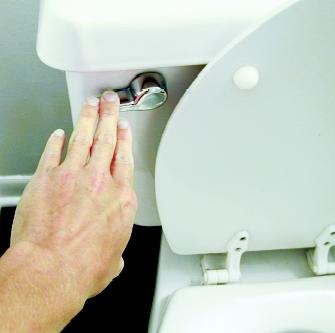
    It was kind of like this.

    Every November, this leaves me at a cross-roads – what’s a better way to waste my vote? To not vote? To go to the booth with zero knowledge of anything going on? Yesterday I chose the latter.

    First, let me say that the voting location, The Pennsylvania Institute of Technology, is probably the creepiest set of buildings I’ve ever seen/been inside. Architecture that screams “stay out,” the type of church/chapel that you’d see in a movie where the devil comes back and has his big face-off with a holy warrior, big trees which make creaking sounds at night, and worst, a wholly inadequate access road for fire trucks.

    Having manned up enough to get out of my car, I walked around rather aimlessly looking for an entrance to the fortress. No doors were labeled, but I managed to walk into what I learned was the completely wrong wing of a building that I’m sure you’ll see on Ghost Hunters in a few years when the county condemns the place. Voting was simple – I signed my name, waited in line with one person in front of me, listened to one of the other voter’s 3-year-old scream like a maniac, then was next in line.

    I got into the booth which had electronic push buttons, then developed a strategy. I saw there were a lot of women in the races, so simply, for every random guy I voted for, I voted for two random women. I also made a point not to vote for the school board person who registered under both Democrat and Republican. How dare he make a mockery of our two party system! How dare he!

    So, having done my part for women’s lib., I pressed the green “vote” button to lock it all in, and I had just done my civic duty. Of course, if Delaware County effectively closes down for one week each month due to my voting patterns, maybe I did more harm than good. (I should really be a stand-up comedian.)

    ****

    Throwing Your Vote Away gets four stars. It sticks it to the man (or maybe the woman, in this case) and gives me slight moral superiority over those that protest voting by completely not voting. Unfortunately, it kind of takes a long time getting there, finding the right entrance, then getting back (especially if the voter in question chose to man-it-out and not actually look to see where the place was, and instead, relied on the “fact” that he could, in his mind’s eye, picture the street sign which said “Manchester” though he had no idea where that sign he was remembering actually was.) In terms of doing even more to throw a vote away I have a few options: vote on only one item – so when they talk about how many people voted, the actual races will have fewer total votes than there were actual voters OR play battleship with the two columns of little lights which glow when you press the candidates’ names. Ah, democracy.

  • The 2008 Phillies Alternate Uniforms

    The Phillies have been one of the few teams to not have alternate uniforms in the last 15 years; the White Sox have their solid black jerseys, the Diamondbacks have their solid red and solid black, and on and on throughout the league. The Phillies have had an alternate hat the last few years, but it’s only worn during the three weeks of interleague games.

    alternates

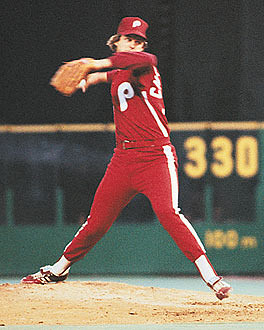
    For 2008, the Phillies will have a third uniform which will hopefully go over better than their 1979 “Saturday Night Specials” which were worn only once. Basically, the new uniform is the home uniform minus the pin-stripes (and the right arm number) plus a new hat inspired by the 1946 design (the modern “P” is slightly different). Well, in terms of being really picky, the vertical strip on each pant leg is blue-red-blue with the normal home uniforms missing the stripe (would look too busy with the pinstripes) and the current away uniforms having white-red-white stripes on the outside of each pant leg. Notice the blue stroke around all of the copy, the blue-red-blue at the edge of each sleeve and neck as well. These details are reminiscent of the late 90’s Blue Jays uniforms.

    The verdict? I like them – I’ve always been a fan of the ill-fated, solid blue alternate hats worn for about a month in 1994 because the 1993+ uniforms have always been very, very red, with no other colors except the blue stars dotting the “i’s” and the blue button on top of the hat. Blue’s seen in the batting practice jerseys and hats, but they’re definitely not the image of the team. I would prefer the brim to be solid blue to match the rest of the hat instead of being red, but it is an obvious throwback to the hats of the late 40’s. (I think a better choice would be solid blue with the stylized logo of the current alternate hats but with a white “P” and red star to create a disturbingly complete symmetry between the home and alternate hats, but oh well – that combination would probably be a bit much, if not unnecessary.)

    ****

    I guess it comes down to whether these new alternate uniforms are more interesting than the 70’s/80’s maroon design. The Brewers wear their wildly popular 80’s uniforms on Friday night home games, and I’m sure that lots of Phillies fans would like them to do the same, but let’s leave those for turn-back-the-clock games instead of being a normal part of the rotation. The 2008 Phillies Alternate Uniforms get four stars: they’re obviously not a risky choice, and I’m sure lots of people will buy a replica when they’re available, so good work to the design team responsible for not copping out and settling on just a solid red jersey with white pants to match pretty much every other team in the league.

    If you’re at all interested in uniform-related stuff, be sure to check out http://uniwatchblog.com, a daily-updated blog on the topic.

  • Best Song Ever? The 1812 Overture (Tchaikovsky)

    Maybe the most in-depth “best song ever?” review…ever

    Only in the US could a song written by a gay Russian guy to celebrate a Russian military victory become a cornerstone of its patriotic celebrations. Sure, the whole “1812” in the title makes it sound like it could’ve been written in relation to the little discussed War of 1812 (USA! USA! USA!). Sure the whole name, Festival Overture “The Year 1812” has exactly no ring to it, and the French Ouverture solennelle 1812 is, well, French, but had it been named something like “Glorious Song Celebrating Russian Victory,” maybe, just maybe, it wouldn’t be a staple of barbecues, Budweiser, and bottlerockets. In lieu of the anti-septic “yes, no, conclusion” form of previous “Best Song Ever?” reviews, I’m going to really tear this one up. Like most everything, Wikipedia has a detailed, thorough write-up of it, so here’s a quick background: 1) commissioned to celebrate the 70th anniversary of Napoleon’s defeat at Moscow in (wait for it) 1812 2) actually from the “Romantic” time period, what with the aggressive dynamic range and being written in a patriotic state of mind (see Finlandia, and the Moldau, both from about the same time period).

    I’ll assume that everyone knows the end of the 1812 Overture (du-duh-du-duh-duh-duh-duh-du-duh-duh-CANNON EXPLOSION!! du-duh … [repeat]), so I’ll be focusing more on the rest of the ~15-17 minutes of wretched Slavic excess.

    First things first, there are a number of orchestral variations that exist: some have a choir at the beginning singing the opening hymn, others have it played by the strings, some even have the choir sing at the end as well, some versions have cannon, some versions don’t. (I prefer sans cannon – the reverberations tend to lose the finer details of the conclusion, that being said, points are earned for incorporating firearms into music. I don’t think Creedence ever had the guts to do that.) Also, there are a number of sonically inferior recordings of the 1812 Overture. The blaring trumpets of the “best part” (see below) will overwhelm low-quality mixes, leaving it painful to listen to, much less “appreciate.” Likewise, in the interest of not clipping during recording, if the opening choir is included, they’re frequently gained way, way down, creating one of those wonderful experiences where your speakers (and ears) are left in pieces when the cannon shots start. After both of these almost technical aspects are taken care of, we’re left at the whims of the conductor – should the opening be minor key Christmas Carol slow or old lady playing the organ slow? (answer: minor key Christmas Carol slow) – should the high end of the orchestra bring it back a few notches when the low end completes the final run? (answer: absolutely) Should the ringing trumpets of “the good part” be included in the arrangement? (answer: yes, but Mr. Conductor had best keep them from blowing the notes out of tune).

    Let’s call the “definitive” arrangement the recording by the Tchaikovsky Large Symphony Orchestra conducted by Vladimir Fedoseyev (1995).

    From 0:00 – 01:08 we hear the opening hymn – sung in this version, frequently played by the string section in other recordings. The hymn is actually “God Save the Tsar,” not a new creation of Tchaikovsky’s. Let’s call this the first good part.

    01:08 – 03:12 Lots of building – starting small, getting large at 02:50. Look out for the tubas to rock your world, speakers, and sense of decency at 2:32. Maybe some “mystery” with the forgotten member of the strings, the double bass being played with a bow, creating “uncertainty and dread.” Maybe.

    03:12 – 03:40 Section played by the upper and middle brass (French horns, the upper range of the trombones). What with the whole “celebrating victory over the French” thing, this is actually a play on La Marseillaise, the French National Anthem. Finally, “musical allusions” I agree with. Remember this ditty for later.

    03:41 – The strings rock out before the brass comes back in at 4:40 playing more variations on La Marseillaise as the strings add flourishes – notice that the flourishes aren’t all by the violins and violas, the cellos and double basses add just as much. The melody is thrown all around the brass department: french horns and trombones, then trumpets, back to trombones, then trumpets again as at 05:03 – the violins flourish with an upwards run, the cellos and basses match it, but in reverse (for you music people out there, that’s called “inversion” …. or “retrograde.”) At 5:07 the string section’s cat and mouse game ends as they’re given the melody for a time as the section begins to wind down at 05:40.

    05:57 – The section begins – woodwinds and strings are left alone to introduce this middle theme. At 6:40 the oboe and English horn get a slight countermelody which at 7:00 is picked up by the flutes who begin their take on the theme at 07:06. Notice the continual tambourine and the bassoon player’s mom standing up during the concert and saying “THAT’S MY SON!!!” because he’s the featured instrument from 7:21 until 7:26. Heck, it might be only 5 seconds, but to a bassoon player, that’s like being TIME’s person of the year. The French national anthem continues to be played with like a cat with a gimpy mouse until the brass add exclamation marks at 08:05, with the tubas even getting in on the French-bashing at 08:45. Uh-oh, I smell segue (08:50 – 09:02).

    Same file as above, to avoid excess scrolling.

    09:02 – 10:17 – I think this is the part where pretentious war movies start and they talk about the “beauty of combat, the man on man, the country vs. country.” At 9:42 the double bass proves why it Le Stinks compared to the tuba, with it barely being able to be heard (9:48 specifically). 09:49 – French Horn Solo! Well, two measures at a time, at least. 10:05 building to what will be the second good part.

    10:18 – 11:10 The second good part. Timpani is played in place of cannon (good move), the trumpets take guff from no man. I assume this is supposed to be the whole “cannonballs wrecking stuff” section as we get blaring, blaring, blaring, then it’s the long, long (long, long) run down the orchestra starting with violins, viola, cello, then double-bass, then (to the chagrin of double-bass players everywhere), the tubas join in around 10:58 and totally drown them out. As it should be.

    11:10 – 12:23 The third good part – also called, “the best part” I’ll be honest, the conductor takes it a bit fast for more liking, but it’s made up for in the fact that this version includes the chorus. This section’s all top-quality; generally the structure is “choir and brass play the role of cannon” then the strings play the part of “stuff blown up and floating through the air after explosion.” Remember the opening hymn, well, this is it all over again. Notice the “ringing” trumpets accenting the melody 1 and 2 octaves up, playing in unison but a 5th above the melody in the low brass. Wait a minute…isn’t root-5th the same thing as a power chord? Indeed it is. Take that rock and roll. 11:42 rocks my world (and makes purple acceptable to wear), so turn your speakers up. Notice the tuba player almost duff the first note of his mini-feature at 11:49, then redeem himself until he takes a slightly too long breath at 11:53/11:54. The chorus and brass do their thing, as the strings begin to wrap up the section at 12:16. Oh yeah, and the bells that start at ~11:06 and don’t stop until the whole song’s over? Someone needs to tell them not to overdo it. Supposedly, the original score calls for “carillon,” but most versions use tubular bells in place of the carillon. Notice the MP3 compression have a major coronary as it tries to compress this section with the bells, the brass, chorus, cymbals, and the strings all playing at FF. What’s a carillon you may ask? Well, if you’ve been to Musikfest, this guy plays a carillon.

    Same file as above, to avoid excess scrolling.

    12:23 – END – You know it, you may love it, you may hate it, but no matter what you think of it, to most people, this is the 1812 Overture. It’s the fourth good part if only by popular vote. It’s actually kind of ho-hum when you listen to it: the drums go bum-bum over and over again, the cymbal player is phoning it in, the cannoneers are waiting for their cue, the violin players are developing carpal tunnel, Clarinet 2 is wondering to himself, “I spent how much money on a music degree, and all I’m doing is playing second Clarinet in this commercial waste of time?!,” but its one saving grace is that the brass is about to get back in and bring it home. This version even includes the closing chorus, so if you ever see it performed live or even on TV (almost never with the chorus), remember this, so you realize what you’re missing. 12:32 The tubas double the chorus, the trumpets assist the violins and woodwinds, the cannon do their thing, and the double-bass and bassoon are apparently in absentia (as it should be). On your second listen-through, notice the trumpet players triple-tonguing the opening of each phrase (listen at 12:36, that’s not one note, that’s 3 super-quick ones, in a row). 12:49 This is a tricky section for most recordings. Frequently, the chromatic run of triplets, which begins at the top of the orchestra’s range with the flutes and violins, gets lost in the soundfield when it gets handed to the low brass (at 12:52) but not in this version. In this one, the notes are even accented on the way down and the tempo is slowed ever so slightly, drawing it out. Making this version even more definitive is that (pay attention), normally, when the chorus sits this section out as the low brass is doing the triplet run, the higher instruments ascend the major scale on each downbeat two octaves above the low brass. In this version, the men’s chorus is singing one octave above the brass, drawing more tension between the simultaneous ascending and descending lines compared to having two whole octaves between each.

    After that, it’s just bombast – nothing extraordinary, though there’s something to be said for throwing the final melody down each member of the brass section, the high trumpets at 13:04, the lower trumpets at 13:05, the french horns and baritone at 13:06 (listen for the sour note during their turn around 13:07), then finally the trombones and tuba bring up the rear. All that’s left now is to wait for the darn thing to end for the next 18 seconds. It’s kind of like watching a dog after it’s let out to go to the bathroom. It runs around the whole yard waiting for a nice spot to take care of its business. It takes a while, but it does eventually end.

    An alternate version (USSR State Symphony Orchestra – Evgeny Svetlanov – 1974):
    No choir (beginning, middle, or end)
    The strings are played in place of the chorus – eh, it’s okay, but he takes them a bit too slowly. At this tempo, they come off more as “emotive” than “expressive.” I’m not sure what that means, but feel free to quote me. It does sound like the instruments are about to cry. Also, I think you can hear the musician’s breath between musical phrases. I’d assume this was someone’s artsy-fartsy idea to “make the instruments sound more like people.”
    Listen (opening only – turn it up a bit):

    More notably, this version includes an alternate ending. Apparently the change has to do with Soviet Russia not liking things praising the Tsar (for some reason). More here.
    Listen:

    At 0:12 – right when you expect the brass entrance, you get…whuh?! Actually, it’s another hymn, but at least you get back in time (0:35) for the epic final run (which is drawn out and even accented by the tubas).

    Here’s the whole thing – it’s pretty much the typical performance. The sound quality is a bit lacking, but it’s certainly passable:
    Listen:

    Another Sample
    Not sure the pedigree of this one, but it shows why that final run (0:04) needs to be recorded and mixed carefully. The bottom half gets completely lost in the explosions and strings.
    Listen:

    One Last Example
    Finally, this is what happens when the end is played too fast. Not only are the trumpets out of sync, they’re blowing the notes out of tune. Also, one of the trumpet players seems to left the building from 0:23-0:27.
    Listen:

    I have a few more renditions if anyone’s interested, but I covered the good ones and the notable differences between variations….and, I’m sure most of you stopped reading after the title.

    ****½

    The 1812 Overture gets four-and-half stars for longevity, effect, and who-cares-if-it’s-“popular” awesomeness. It makes fun of the French, incorporates military equipment, and has been co-opted by the US; really, what else is there? Half-a-star is deducted for that middle section. It’s good, but unfortunately doesn’t compare. It is not the best song ever, but it’s definitely breathing rarefied air.

  • Guest Review: Madden 2008 (XBox 360)

    Guest Review! Kyle from notthegame.com weighs in on Madden 2008.

    Madden 2008 is a bit of an enigma. In the last few years, on the new systems, Madden has been a sub par football game. This is typical for sports games on a new system as it takes game developers a few years to revamp the game engine, as well as improve graphics and features. The third year is typically the year when progress starts to be made. Take the PS2 versions, for example, in 2002 and 2003 the game redefined the way football games look but they didn’t play that well, in 2004 the game took on a life of its own, and by year four in 2005, Madden reached its pinnacle. That lines the 360 version up for 2009 as the pinnacle of its success on the new systems.

    Madden 2008, however, is a serious step in the right direction. This year, Madden has perfected the game play, improved already stellar animations, and added the features and options we have come to expect from the Madden franchise. If by next year, EA Sports can improve the presentation, get rid of the god awful radio announcer, and add some innovation to franchise mode, the game will reach a level never before seen.

    That being said, here is a break down of this years game.

    Graphics:

    Madden has never really been known for its graphics and animation, but this year that is starting to change. Animations are now much more natural, as players will reach for balls and drag their feet on the sideline. EA Sports uses what it calls a “branching” system. Essentially, this allows the movements to transfer from one to another seamlessly. In 60 frames per second, the game runs beautifully, but since everything is so smooth, the occasional jump in animation between say, standing and falling, seems very out of place. All in all the graphics are very good, next year EA Sports needs to add some more presentation elements.

    Sound:

    The radio announcer sucks. It sounded like a good idea, but really he is just annoying and makes the game feel outdated (think Joe Montana Sports Talk Football), there is no reason why the biggest selling sports game of all time shouldn’t have real announcers. The hits and the players yelling make the on field experience great, but the crowd is just “ok”.

    Gameplay:

    Extremely fun and fast. The game plays with a ferocity that Madden hasn’t seen in years. The hits, running, and catches are truly fun to accomplish, and the realism is outstanding. It is one of the few games where neither the defense or the offense dominates. Some games are commanded by defense, while others are controlled by electric offensive players.

    The new superstar abilities is well implemented and really gives stars individuality on the field. If you try to tackle Lindell White high, forget about it. For big backs, you need to hit them low utilizing the new Hit-Stick 2.0. It is these little idiosyncrasies that really make the game shine. The gameplay is tight, but it does feel a little tired, as the plays have been the same for years now.

    Features:

    Franchise mode has some added options, most specifically the ability to relocate your team. Superstar mode has playable camera angles, but during the season there is not much to do other than play games, practice, and bitch to your agent. Its fun, but its not a fulfilling experience as you only get to play the plays with your player, so you don’t development an emotional connection to your team.

    Overall:

    Madden plays great, looks good, and sounds horrible. In all, it is a good game, but there are times where I feel like I’m left wanting more. This years game is shaping up to be the penultimate game, with a little tweaking, next years will reign supreme.

    8 K’s out of 10. A Brett Myers.

    KKKKKKKK

    Dan: Uh, 8 “K’s” out of 10? A “Brett Myers?” These aren’t star ratings! How are we supposed to make sense of this? Let me do some math…

    ****

  • Best Song Ever?: Everyone Gets a Star (Albert Hammond, Jr.)

    Note for those using feedreaders: the song is embedded on this review’s entry so there’s a point-of-reference in the review; you might want to view this entry from the webpage instead of the feed.

    Background
    About six years ago during the throes of the boy-band era and Creed’s establishing themselves as the benchmark for “rock” for the next few years (face it, it’s true, unfortunate or not), “rock journalists” began hyping a new, unsigned band from New York who would supposedly save rock (and/or roll). Well, it’s been six years later, and The Strokes are still more-or-less “the who’s?.” Notably, they were pretty much the first of the “the” bands (the Hives, the Vines, the White Stripes) to get significant mainstream exposure. With the benefit of hindsight, we can see that The Strokes didn’t really end up changing the world, but they do have three perfectly solid albums to their name (some publications weren’t too fond of First Impressions of Earth, but I digress). Long story short, Albert Hammond, Jr. is the lead guitar player in The Strokes, and his first solo CD, Yours to Keep, came out in late 2006. With one listen, his membership in The Strokes is obvious, but the music manages to be a bit less “garagey” sounding than a typical Strokes track, with slightly higher-gloss production and even some vocal harmonies throughout. Consider the album highly recommended.

    For

    • The bass part is actually played by a guitar for most of the song. The rhythm part during the opening (up to 0:21) is being played on a guitar. Once the bass comes in at that point, the guitar stays with a bass-type part instead of playing chords (around 0:43 the second rhythm guitar comes in, with the rhythm guitar continuing its “bass line.”)
    • Deceptively complicated for such a simple-sounding song. At 2:04 listen to four separate rhythm parts (rhythm guitar 1, rhythm guitar 2, bass, drums), all of which are unique. (the parts aren’t doubling each other, in other words).
    • Incredibly catchy – I guess that’s that whole “intangible” of a “good song.”

    Against

    • Relentlessly dull lyrics:

      These guys have all got problems. / These guys have all got their problems.

      He’s rhyming the word “problems” with…. “problems.”

      When will you stop and see me through / There’s something else I’d rather do

      “Do” is the first entry in any rhyming dictionary for “through.”

      Today, you’ve come now go away.

      Points for the internal rhyme, but points off for the faux-deep jumble of words.

    • The “breakdown” at 2:24 (in other words, when the unique aspects of the song get thrown out) should be a true bridge, not “well, I don’t have any more lyrics, and I don’t want to end the song by repeating the chorus over and over again, so I’ll have it ‘rock out!’ here.

    ***

    Unfortunately, it’s not the best song ever. It had a darn good thing going, then all of a sudden…. well, it didn’t. Considering this is his first solo CD and I’ll say this one song is stronger than anything on Is This It? (except maybe “Someday.”), it doesn’t need to be the best song ever.

  • Rubbie’s Southside Bar and Grill (Louisville, KY)

    [consider this line the token “and we’ll start to write more frequently…I promise”]

    According to whatever research I had done, Kentucky is famous for barbecue. Judging from the competitive grilling shows that I’ve seen (not a joke), my memory tells me that Kentucky barbecue is all about the sauce and St. Louis barbecue is all about the spice rub. I’m a sauce guy, having frequently talked people’s ears off and began awkward conversations about one’s favorite barbecue sauces until my sauce enthusiasm overtook the underwhelmed victim’s interest and desire to continue the conversation. And people wonder why I’m awkward around girls. (well, that and the fact that I have/run a website)

    ribs
    My class knows no bounds. Neither does my belt size.

    With a GPS unit with a “barbecue” category in the “food” menu. (You tell it what kind of food you want, it tells you how to get there. Kind of like a reverse drive-thru, I guess.) We randomly picked the fourth item, “Rubbie’s.” In two hours later hindsight, I’m not sure why I, as a sauce guy, would agree to a place called “Rubbie’s,” but I guess I thought it was “Ruby’s” but spelled incorrectly.

    My traveling companion gave the typical “if it looks awful, we’re going somewhere else.” I’m not familiar with Louisville at all (nor should I be, thank the FSM), so it was just a point on a map of uncertainty as far as I was concerned. Pulling up, indeed, it didn’t look too special. Rather divey, but in a quaint, people playing beanbags and poker outside of the place sort of way. I’m not picky, so it worked for me. I don’t get much out of the whole “rustic” charm thing (people who do should replace their toilets with outhouses, to make sure they’re getting the full effect of what they claim to love), but more than anything else, I didn’t want to pick yet another arbitrary place in the list of restaurants of unknown quality.

    I don’t review ambiance, but in short, there wasn’t much. A food critic would include an overly colorful sentence about how “in the evening, the characterless walls and booths achieve a sense of ghostly familiarity as the drinks and conversations ebb and flow.” The menu was small, with the barbecue section tucked in a corner of the menu. There were the typical barbecue offerings: pulled pork, brisket, wings, and ribs. I picked the full rack of ribs (a whopping $12.50, which is the absolute lowest I’ve ever seen for a full rack of ribs), and my traveling partner chose the small pulled pork sandwich ($4.50). Sides selected were steak fries and onion rings, though considering my future held large quantities of meat, I laid off the fried things.

    At my advanced age, I’m not prone to hyperbole, especially related to food, but (say it with me) it was truly nothing short of incredible. The meat wasn’t “fall off the bone tender,” but I have four pointy teeth for a reason. In full caveman mode, I pretty much destroyed both of the racks, using the two supplied sauces liberally. Well, actually I pretty much focused on the “normal” sauce; the “hot” was so intense that had I used of it, I would’ve had to go to a hospital and a church, and probably not in that order. The “normal” sauce was like none I’ve had before: much more molasses than I was used to, but not overwhelmingly tangy. It had bite, but no kick. They left the kicking for the bottle of “hot.”

    The pulled pork was equally good (though in all honesty, I’m not a big pulled-pork fan). Perfectly tender and not at all chewy. There was some sort of smoke-aging present in both meats, but I can’t tell Mesquite from whatever else would be used for it, so I’ll just leave it at “the smoky flavor added a lot to the natural taste of the pork.”

    Cheapskate or not, this is probably the most amazing part:
    The total for two people was $20.13. And that includes tax. There wasn’t any alcohol on the tab (which screws up any cost comparisons), but that’s border-line ridiculous for both the amount of and quality of food presented.

    And finally, the weakness of my Constitution is known all the way from here to Hong Kong, and it looks like I’ve finally found a barbecue place which doesn’t much any/much garlic in their sauce. This means that right now, my body isn’t trying to destroy itself to punish me for my foolhardiness, and that’s a first for getting barbecue at any restaurant.

    *****

    Rubbie’s Southside Bar and Grill gets five BIG stars. Great food, better prices, and bean bags if necessary.

    Their address:
    Rubbie’s Southside Bar and Grill
    6905 Southside Drive
    Louisville, KY 40214
    502-367-0007

    Also, I drove by what might be the worst house location I’ve ever seen: they’ve got amusement park screamers not far from their backyard, an airport across the street, and the “street” is an interstate. Too bad a railroad crossing isn’t in their backyard and the hog rendering plant a few blocks upwind closed last summer…

  • People Who Say “Cheers” Instead of “Goodbye”

    Special note on the title: I figured that there must be an opposite of the word “greeting,” and it turns out it’s “valediction.” Instead of using a houty-touty word such as that, I’ve grouped everything into the serves-all “goodbye.” You’re welcome.

    I saw some of the MTV Movie Awards tonight, and Johnny Depp, accepting Best Performance for Pirates of the Caribbean 2 (Piratey-Boogaloo), did the normal awards-show spiel after receiving a lengthy standing ovation from the audience. Nothing out of the ordinary… except, instead of ending his speech with “thanks,” “bye,” or even the ‘look at me, I’m a World traveller’ and I want you to know it, “Ciao,” he dropped this gem: “Cheers.” What is this world coming to. And that’s not a question. Given the wide variety of ways to say “goodbye” (even some that serve to combine it with a “thanks” aspect), he has to give the trendy, pretentious “cheers.”

    euro
    Cheers, hippy

    Let Johnny Depp serve as an example for the problems with the phrase, but his usage was no more egregious than any others’. I take exception with this expression for three reasons:
    1) “Cheers” is a drinking-related saying. That’s fine, but this was an awards show, not a restaurant. It wasn’t even the Golden Globes which (obviously) serves alcohol. This is the biggest issue – it makes no sense.
    2) It reeks of Eurotrash and, even worse, Americans who wish they were Eurotrash. You know these people – they refer to manual transmissions as “standard” and call elevators “lifts” just so you can make a weird face at them to which they respond by saying these exact words (every time): “I was in London, and that’s what they call them in London.”
    3) I’d like to take credit for being part of the cusp of the expression “not so much.” In fact, my earliest documented utterance of the phrase was way back in July of 2004. I challenge anyone to beat that. I’m not claiming to be first, but I’d like to think I beat any of you seven reading this to the punch. How is this related to “cheers?” Well, tangentially at best. I guess I’m just a little bitter, and my lexicographic warning radar is going of like crazy about the soon-to-be “cheers” phenomenon. Consider this my warning to people who want to keep European lingo where it belongs.

    People Who Say “Cheers” Instead of “Goodbye” get ZERO stars. The English language has hundreds of thousands of words, and provides myriad tools for making up words (such as “spamera” – n. a digital camera used to take pictures which will later be e-mailed to everyone the camera owner knows, but no one will look at. Usage: “Yeah, my mom is unfortunately bringing her spamera to my nephew’s pre-school graduation next weekend, so I’m definitely going to spend time familiarizing myself with the delete button in my e-mail program.”) Hmm. That’s actually a pretty good made-up word. Anyway. Lots of words, easy to make-up new ones. Does the bowel of the English language that is the British dialect really need to be given a colonic every time someone decides that he’s too cool for “bye” or “thanks?”

  • Comic Book Movies Being True to Comic Book Books (aka Spiderman 3)

    First things first, I don’t normally care about the “cleanliness” of a comic book’s translation from paper to film. I think it’s good that Sentinels weren’t in the X-Men movies, that the Joker killed Bruce Wayne’s parents in the 1989 Batman movie, and that Peter Parker was magically able to shoot webbing from his wrists after getting bit by a spider (as opposed to him constructing webshooters with his nerdy science skills). Long story short, “the internet (comic book branch)” finds it egregious – in fact, here’s someone’s take on the fact that the comic book has incorporated the detail from the movie. Blasphemy! [the most fundamental aspect of why these “internet people” are wrong is as follows: the movies go out of their way towards unenjoyable awkwardness establishing Peter Parker as an awkward science nerd. Having him construct webshooters in the movies is wholly unnecessary. There are no doubts about just how nerdy he is in the movies.]

    sp3
    Lycra and rain, never a good mix.

    As a disclaimer, it’s been a long while since my comic book “phase” – upwards of 10+ years. I was into Spider-Man when I was little, maybe 6 or so. This would’ve been too young to really process any of it beyond see that he was a guy who could walk on walls and stuff like that. (To really feel old, let me mention that I had Spider-Man read-along record and book set that I practically memorized.) My comic book interest followed the 1991 re-launch of X-Men, The Death of Superman, DC vs. Marvel, and ended with the Age of Apocalypse. As always, ladies, take a number. Anyway, I’m no expert on Spider-Man, and to the horror of true believers, most of my Spider-Man background comes from the cartoon show and the video game Maximum Carnage.

    Now, I don’t care about the whole “webshooters” thing – the argument that Mary-Jane in the movies is actually Gwen Stacey is even weaker. But, when there are little interesting details in the story (which would be in no small part inspired by the comics), why not include them? The Sentinel head in the third X-Men movie didn’t require any explanation: it wasn’t important to the plot and it was just a random thing for those who’ve never read the comics or seen the TV show, but it’s a neat little thing to put on the screen for five seconds.

    The Spiderman movies are probably the most appealing comic book movies for non-comic book people. That’s fine. The movies are a bit cheerier in style than the X-Men movies or Superman Returns, but they work to the tune of what will soon be more than one billion dollars. Anyway, enough of this disjointed mess. Here’s what’s right or wrong with the movie (from a “movie” point of view, regardless of the comics) and a tiny little thing that would’ve added a lot to it.

    I’m about to ruin the movie for you, if you’ve not seen it:

    1. If you really liked the first two, you’ll really like this one.

    2. After Sandman was “killed” the first time, there was no longer any plot. There was the lovey-dovey stuff, but that’s absolutely a side-show to the Spiderman story. If they wanted to make a romantic drama (it definitely wasn’t funny enough to be even a marginal romantic comedy — except the French waiter scene… HI-larious), they wouldn’t spend $250 million on an action movie.

    3. Venom, about whom “the internet” was crazy, was never mentioned by name and didn’t show up until 20 minutes before the end and only came into being by a stupid (stupid) coincidence. I don’t care how he came to be in the comics (Secret Wars, space, etc.), but the movie dumbed it down too much. Even someone who’s never heard the story would say that it’s stupid.

    4. Here’s my little detail (also Venom-related): the movie never called him by that name (that’s fine), but the whole symbiote thing (in the comics and TV show) made it so he always talked in the first person plural, leading to the following exchange. “Who are you?” – “We are Venom.” Now really, how tough would it have been to include that? Instead, they wanted to humanize their villains and frequently show Eddie Brock appear through the suit. Now really, does this movie need its villains to be any more humanized with Sandman (“I did it by accident, but even so, it was for my sick daughter”), (New) Green Goblin (“I got amnesia and love you guys. Wait, you killed my dad. Wait, no you didn’t because my butler finally told me the truth after I spent millions of dollars assembling a woefully impractical flying glider and pumpkin-shaped grenade launcher.”), and Eddie “slimy, but not evil until the last 20 minutes of the movie” Brock? Oh wait, Spider-Man himself is over-the-top “deep” as well. It’s not complexity, it’s painting in shades of grey because it keeps everyone smiling. Redemption for the win!

    **½

    Comic Book Movies Being True to Comic Book Books (aka Spiderman 3) gets two-and-a-half stars because there are some things that enhance a story, but for the most part, the correct decisions in terms of translating from “page to screen” are made. The Starjammers have no place in the serious, grounded in a sort-of reality (within reason) X-Men movies, so distilling the Dark Phoenix Saga into a silhouette in a lake and a crazy chick in X-Men 2 and 3 worked wonders for making money. But, that isn’t to say that there aren’t cool little details that shouldn’t be added. For example, Spider-Man’s black suit looks a whole lot snazzier with a big white spider on it than with grey details, but oh well…

  • The End of Scrubs

    Update 3 (1+ weeks later): The ad during tonight’s SNL 90’s retrospective billed this week’s episode as “only three episodes until the season finale. I guess that’s that.

    Update 2 (four days later): So, it looks like NBC is advertising this week’s Scrubs as being the first of “the last 3.” Hmm. They even emphasized the “last 3” section. Heck, they made mention of characters making the “biggest mistake of their lives”, then showing Elliot and Keith’s wedding scene then JD looking emotive (as usual).

    Update (ten minutes after posting): I guess I should check Wikipedia (of all places) before I start posting things I think are facts. Looks like NBC has yet to officially renew the show, but according to Zach Braff himself, ABC is willing to air the last season if NBC does not renew it. Media watchers, don’t worry, I’ve added the “journalistic integrity” category to this entry. Regardless, I stand by my comments about this season.

    I haven’t seen this reported anywhere else online (yet), but during a teaser for tonight’s episode of Scrubs during The Office, the voice over announcer said something like, “the first of the last four Scrubs episodes.” It was said that the show’s status was up in the air, then there were stories about NBC throwing huge sums of money at Zach Braff to get him to come back for one more year. Well, I guess that didn’t turn out so hot. And that’s a good thing.

    You might remember my epic review of Scrubs last year as being one of three notable parts of “the current TV landscape,” so me thinking that the show might be capital “O” Over might not make any sense. Simply, if you’ve watched the show at all this season, you understand. Not just “not quite the same as older episodes,” the first 10 or so episodes were awful. Dreadful, painful-to-watch TV. Mind you, this isn’t like the-Simpson’s-were-better-back-when thinking, where old episodes are more thought of as a collective period of time rather than individual examples of the series strengths. Just last season could be considered “classic Scrubs.” Who knows why, but this season didn’t get watchable until about episode 13, with one of the first twelve episodes being a brutal clip show and the other being a show about the newer Iraq war which served only to get politically simple people to say, “Wow, they really brought a new voice to the argument.” Oh yeah, one of the pre-13 episodes was a highly hyped musical episode. It was tedious, so say the best.

    Last year, I wrote that with Turk and Carla’s baby and JD’s impending fatherhood, the characters and show were growing up, and the show wasn’t about grown-ups who acted grown-up. This should’ve been an occasion to use this season to wrap things up, but instead, Carla got an after school special version of postpartum depression, recovered from it, then the baby all-but disappeared from the show (a fair move – the show’s not about babies). Also, JD’s impending fatherhood/implied-eventual marriage was thrown out the window with the good, old-fashioned “tell the long distance dad-to-be that mommy had a miscarriage, but actually lie about it” move. It’s like putting drama in a piggy bank.

    All that said, the recent episodes have been solid, but the show’s been on since 2001 (yikes, that’s a long time for a show most people have never watched), doesn’t have many viewers, became self-aware about how limited the main character was last year, and gave a potential setup for a season-long arc about JD “growing up” at the end of last season, then blew it. Of course, Scrubs is practically the template for wrapping things up efficiently and poetically (with indie music playing in the background, of course), and the series finale would pack a doozy, I’m sure [not sarcasm]. Considering that the writers did one of the tidiest jobs ever of removing a “Ross/Rachel” relationship from a show in a gutsy, (female) viewer alienating move at the end of season three, the slight (maybe unintentional) tension between JD and Elliot was a bit out of place on tonight’s episode, who knows if they’ll go that route, though Elliot’s boyfriend proposed to her to end of the episode.

    ****

    The End of Scrubs gets four stars because it’s about darn time, but loses a star because it could’ve been setup better considering how last season ended.

    I’m thinking about it some more, and maybe the voice-over lady during the promo meant they were the last four episodes of the season, but one can hope. Still, the show is responsible for one of the best ever TV moments, so I guess they’re entitled one more season…